
Last updated November 25, 2026
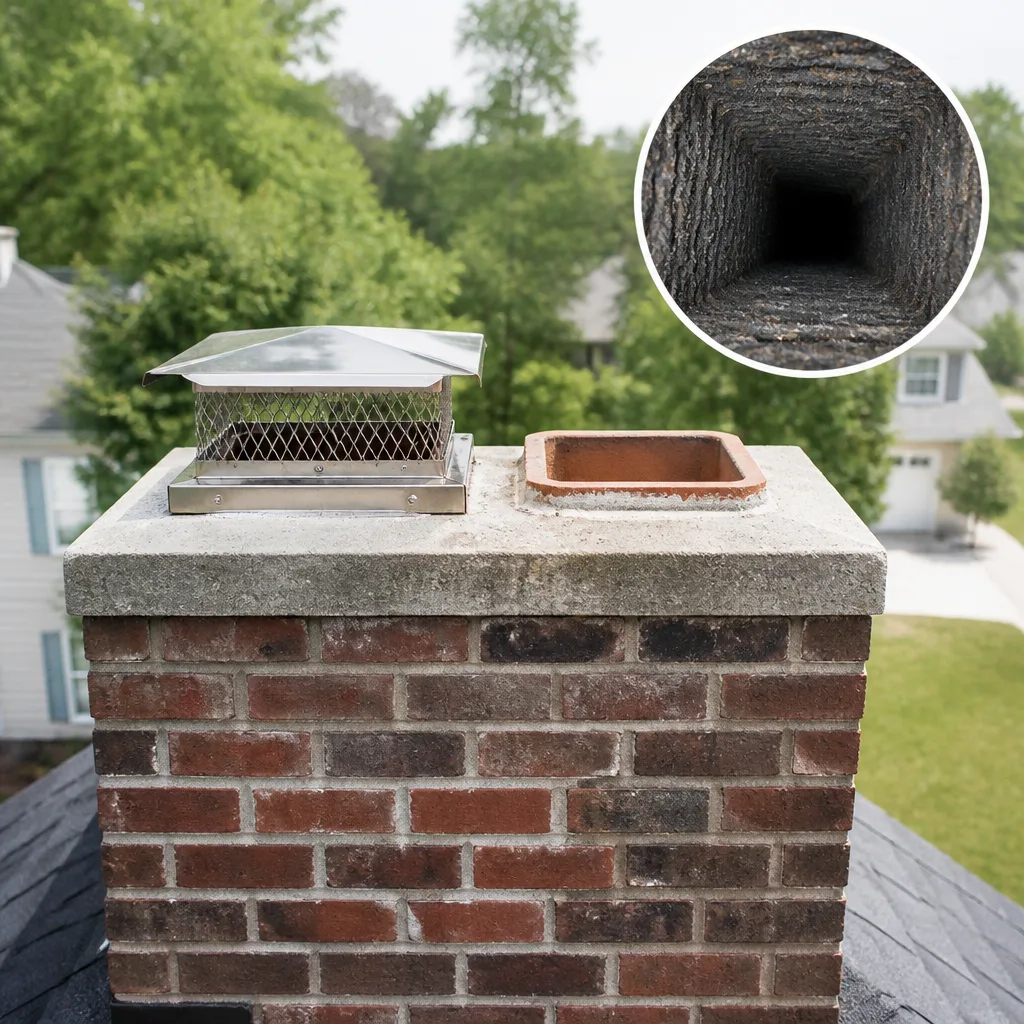 Sweep & inspection
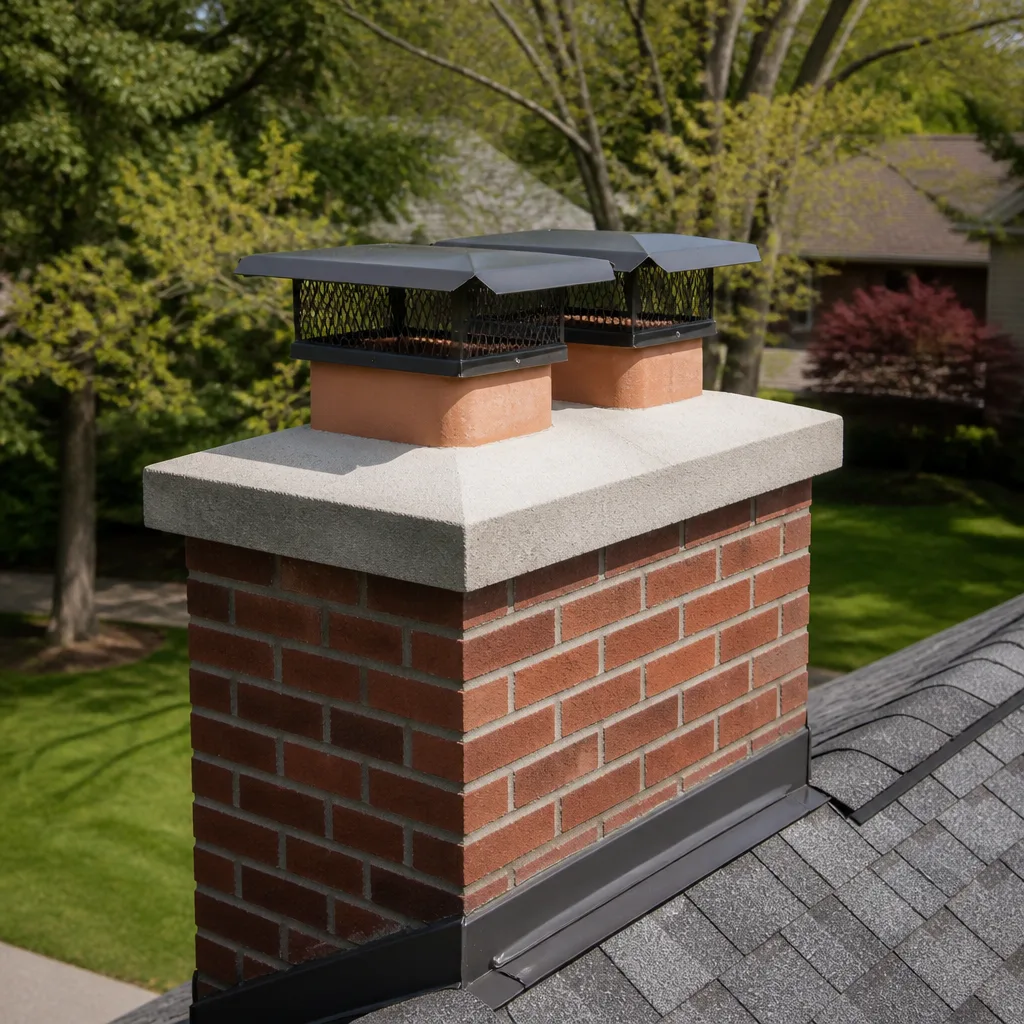 Caps & crowns
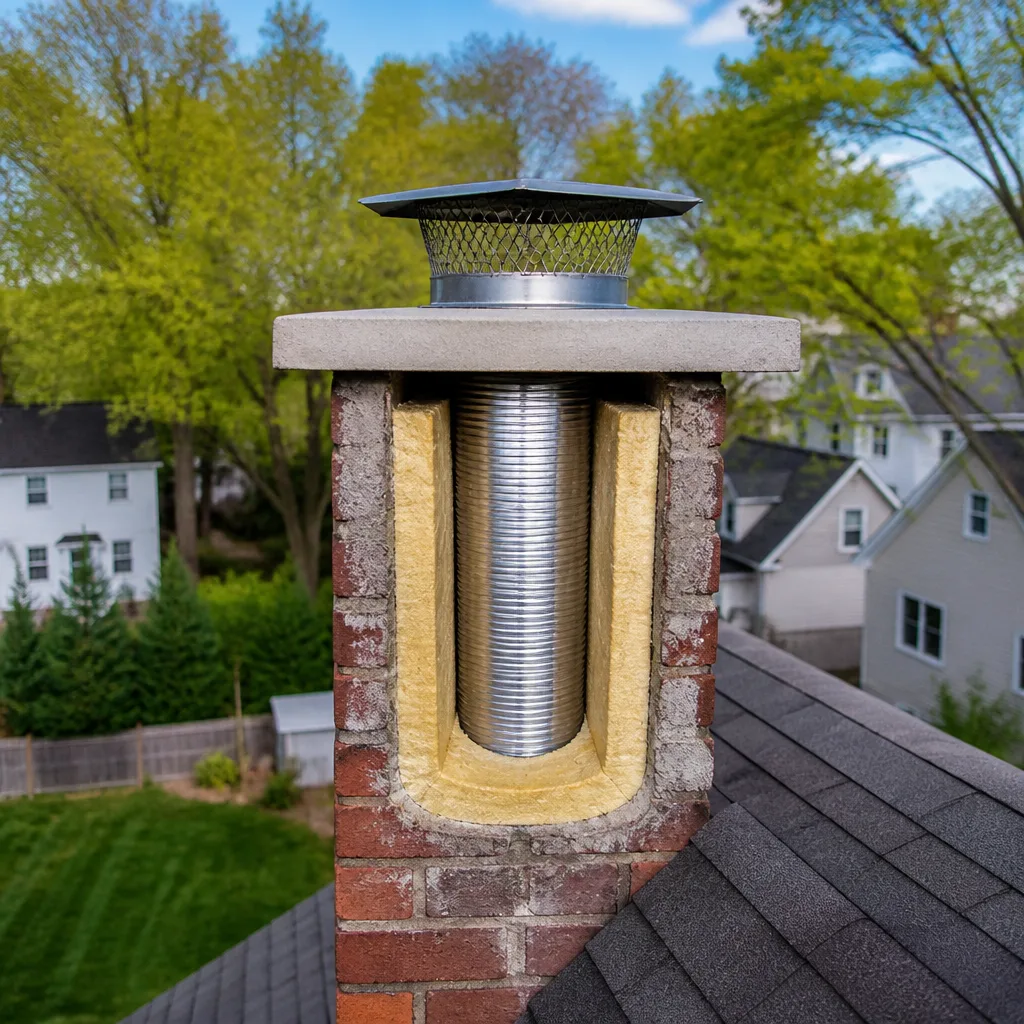 Flue relining
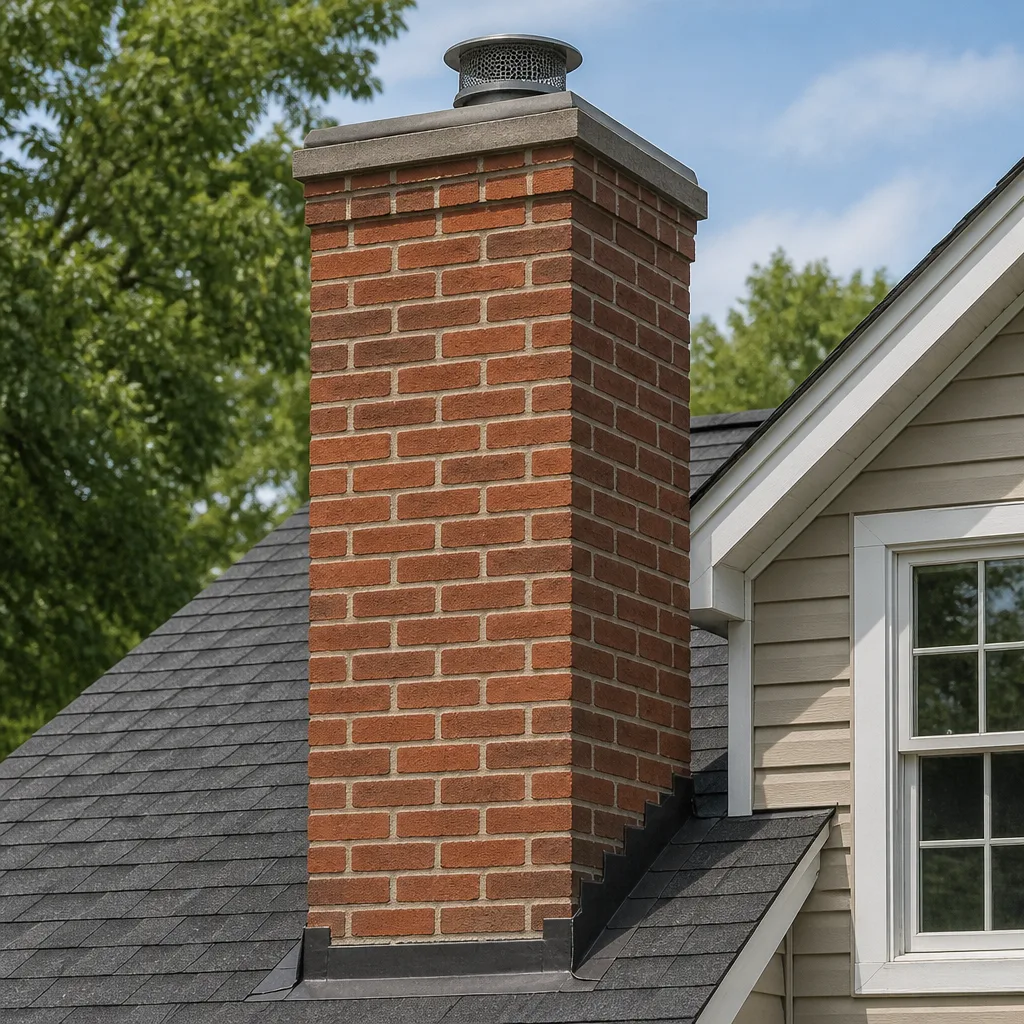 Masonry repair
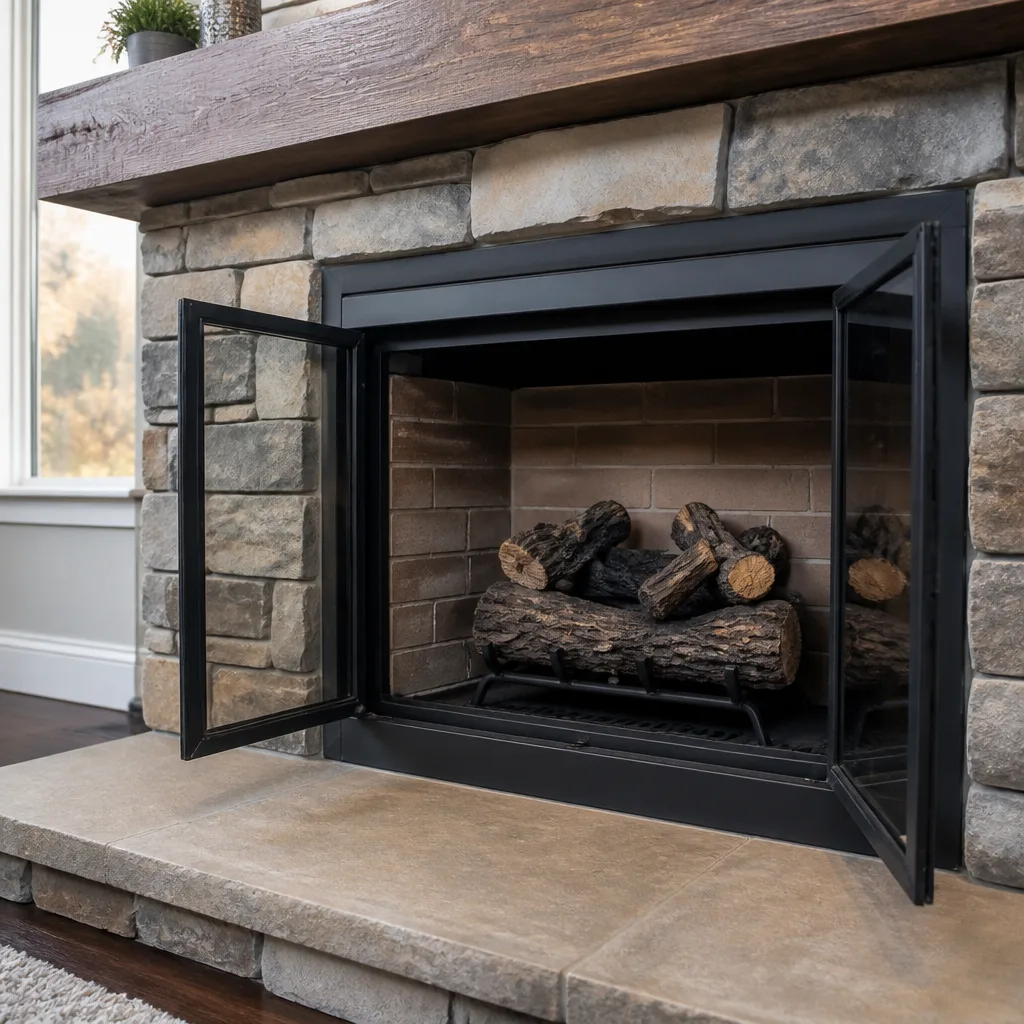 Gas fireplace service
Level 1 sweep and inspection to the NFPA 211 annual standard - flue, crown, cap, and flashing checked and photographed
Chimney sweep logs do not sweep chimneys. They loosen some creosote - which then falls where a brush and vacuum still have to collect it.
The Complete Guide to Chimney Cleaning in North Buffalo
Most chimney fires we’re called to assess happen in flues that were swept within the past year. Not because the last sweep was a scam, but because the homeowner never got a straight explanation of what “clean” actually means for their fuel, their burning habits, and their chimney’s construction. A flue that looks clear from the firebox can still carry a glaze of hardened creosote a brush won’t touch. In North Buffalo, lake-effect moisture and a housing stock full of pre-1970s brick chimneys make that gap between “swept” and “safe” wider than most guides admit. This guide walks through the full cleaning process as it applies to chimneys here: what creosote stages look like, how freeze-thaw cycles change what a thorough sweep must include, which tools handle which flue conditions, and what a Level 1 versus Level 2 inspection actually tells you.
Quick Answer
Chimney cleaning in North Buffalo means removing soot and creosote from the flue, then inspecting the liner, mortar joints, cap, and crown for the specific wear that Western New York’s freeze-thaw cycles cause. A proper cleaning pairs the sweep itself with at least a Level 1 inspection, and a Level 2 inspection whenever the flue has changed, been damaged, or hasn’t been assessed since you bought the house. Most wood-burning fireplaces used regularly through the heating season need sweeping once a year.
Styles & brands we work with
- Sweep & inspection
- Caps & crowns
- Flue relining
- Masonry repair
- Gas fireplace service
Table of Contents
- What “Clean” Actually Means for a North Buffalo Chimney
- Stage 1, 2, and 3 Creosote: What You’re Really Dealing With
- How Buffalo’s Freeze-Thaw Cycles Change What a Sweep Must Include
- Pre-1970s Brick Chimneys and the Missing Liner Problem
- Rotary Systems vs. Brush-and-Rod: The Right Tool for Your Flue
- Level 1 vs. Level 2 Inspections After Cleaning
- What Chimney Cleaning Costs in North Buffalo
- What a Full Cleaning Visit Looks Like, Step by Step
What “Clean” Actually Means for a North Buffalo Chimney
A chimney is clean when the flue surfaces are free of combustible deposits to the point where a hot fire can’t ignite them, not simply when the soot is gone from the firebox. Those are different standards, and the gap between them is where problems hide.
Here’s the practical version we work from. A flue that’s been swept properly has had the creosote removed down to the liner or brick surface, not just the loose flakes knocked off the top layer. In a fireplace burning seasoned hardwood, that usually means a light, dusty soot that comes off with standard brushing. In a fireplace burning green wood, treated lumber scraps, or a mix of both across cold months, the deposits build harder and faster, and brushing alone may not reach the glaze bonded to the flue wall.
North Buffalo adds a wrinkle. Chimneys here run through a long, damp shoulder season followed by deep cold, and that moisture cycling softens creosote, lets it re-form in new layers, and drives it deeper into porous brick. What reads as “clean” in October can be a hardened shell by February. The standard we hold to is this: a flue is clean when the sweep has verified the interior surface condition, not just run a brush up and down and called it done.
Three things define a properly cleaned flue:
- Deposits removed to the liner or brick surface – not just loosened at the top layer
- The smoke chamber and smoke shelf cleared – these sit above the damper and collect creosote a flue brush never reaches
- The firebox, damper, and cap checked – because a clean flue behind a stuck damper or a damaged cap is still a hazard
That third point matters more here than in drier climates. A cap with a cracked or missing screen lets in rain, snow, and nesting birds, and moisture is what turns ordinary soot into the corrosive, combustible glaze we spend most calls removing.
Stage 1, 2, and 3 Creosote: What You’re Really Dealing With
Creosote forms in three distinct stages, and knowing which one is in your flue tells you what the cleaning actually requires. Most North Buffalo homeowners we assess by mid-winter are dealing with Stage 2.
Stage 1 is the light, flaky, dusty soot you can brush away with a standard chimney brush. It forms when a fire burns reasonably hot and the wood is reasonably dry. It’s the easiest condition to clean and the sign of a chimney that’s been used well.
Stage 2 is where things get serious. It’s a crusty, hardened deposit, sometimes flaky, sometimes tar-like, that bonds to the flue wall and doesn’t come off with a pass or two of a brush. Stage 2 forms when fires burn cooler than they should, when the wood is damp, or when a flue has a draft problem. In North Buffalo, Stage 2 is common by January because homeowners throttle the damper down to stretch a fire through a cold snap, and that cooler burn deposits more creosote than a hot, clean fire would. Stage 2 requires more aggressive removal, often a rotary system, and it’s the stage most likely to ignite.
Stage 3 is glazed creosote: a hard, shiny, tar-like coating that’s essentially a fuel layer bonded to the flue wall. It’s the hardest to remove, it can require chemical treatment before the flue can be swept, and it’s the most dangerous. A flue with significant Stage 3 deposit is a chimney fire waiting for the right temperature. In our experience, Stage 3 shows up most in flues that have gone several seasons without sweeping, in chimneys serving older stoves burned low and slow, and in flues with poor draft or a damaged liner.
Why the stage matters: it determines the tools, the time, and whether a cleaning can be done in one visit or needs a follow-up. A Stage 1 flue might take under an hour. A heavily glazed Stage 3 flue may need chemical treatment, a return visit, and a close look at whether the liner can be saved. If someone sweeps your flue without telling you which stage they found, you don’t actually know the condition of your chimney.
How to read your own deposits
You can check the firebox and the first few inches of flue above the damper without climbing anything. Black, flaky soot that wipes off on a finger is Stage 1. Crusty, hardened patches that resist a fingernail are Stage 2. Shiny, glassy, tar-like coating is Stage 3, and that’s the point to stop poking at it and call a specialist, because disturbing glazed creosote can drop burning material down the flue.
How Buffalo’s Freeze-Thaw Cycles Change What a Sweep Must Include
Western New York’s freeze-thaw cycles work on a chimney from the outside in, and that’s why a cleaning here has to include exterior condition as well as interior deposits. Water gets into the masonry, freezes, expands, thaws, and repeats, and each cycle widens the tiny cracks in mortar joints and brick faces.
The result is visible on chimneys across North Buffalo, especially on the north and west faces that take the most weather. Mortar joints between courses crumble and recede. Brick faces spall, meaning the outer skin flakes off and exposes softer material underneath. And a chimney crown with a hairline crack lets water into the top of the chimney, where freeze-thaw does the most damage because that masonry stays damp longest.
Why this belongs in a cleaning guide: a sweep that only clears the flue and ignores the masonry is doing half the job. If the mortar joints between flue tiles have deteriorated, creosote and moisture can work into the gaps, and the flue is no longer a sealed channel. If the crown is cracked or the cap is damaged, water keeps getting in after the cleaning, and the next heating season starts with a chimney already wet.
A thorough cleaning in North Buffalo should include a look at:
- Mortar joints between brick courses – for crumbling, recession, or missing mortar
- The chimney crown – for cracks that let water in at the top
- The cap and screen – for damage or gaps that let weather and animals enter
- Flue tile joints – for open gaps where creosote and moisture can collect
- The smoke chamber – for corbelled brick that makes a rougher, more creosote-prone surface than a smooth flue
When we find a damaged crown or cap, the fix usually comes from a dedicated chimney product line rather than generic hardware-store parts. Chimney cap & crown work sourced through brands like Gelco, Famco, or Copperfield holds up through Western New York winters in a way a universal cap does not. That’s the point of using professional-grade materials on a job like this.
Pre-1970s Brick Chimneys and the Missing Liner Problem
A large share of the housing stock in North Buffalo was built before 1970, and many of those chimneys were built without a clay tile liner at all. That’s the single most important thing to know before you light the first fire of the season.
Older chimneys here often have a bare brick flue, or a flue lined with a single course of tile that has since cracked, or a flue originally built for coal or oil service that was later given an unlined wood-burning insert. Bare brick is porous and irregular, and creosote bonds to it far more readily than to a smooth tile liner. A cracked tile liner is worse than bare brick in some ways, because the gaps between tiles let creosote and heat reach the surrounding masonry and the framing beyond it.
What this means before you burn:
- Find out whether the flue is lined. A camera inspection of the flue interior is the only reliable way to confirm what’s behind the firebox.
- Check for cracked or separated tiles. Even a lined chimney can have a liner that has failed at the joints.
- Check what the flue was originally built for. A chimney sized and built for coal service may be too large for a modern wood stove or insert, and an oversized flue drafts poorly and deposits more creosote.
- Confirm the flue is safe before the season starts. An unlined or damaged flue with a fire burning in it is a direct route for heat and sparks into the structure.
When the liner can’t be saved, the right fix depends on the flue’s condition. We use DuraFlex flexible liner systems where a rigid liner won’t fit, and HeatShield resurfacing, a system built to restore a deteriorated flue liner by resurfacing it rather than replacing it, where the existing flue has enough integrity to be restored. Two different solutions for two different conditions, and the choice should follow the inspection, not precede it.
Rotary Systems vs. Brush-and-Rod: The Right Tool for Your Flue
Two tool setups do most of the work in a professional sweep: brush-and-rod, and rotary systems. Which one a job needs comes down to what your flue is lined with and what kind of deposit is in it.
Brush-and-rod is the traditional method. A chimney brush sized to the flue is pushed up on sectional rods, and the bristles scrape loose soot and Stage 1 deposits. It’s controlled, it lets the sweep feel the flue surface through the rod, and it’s the right approach for a flue in good condition with light deposits and for clay tile liners that a stiffer tool could damage. It’s also the method that works best on the smoke chamber, where the corbelled brick needs hand brushing to clear creosote it collects.
Rotary systems use a spinning head, often a whip or a set of chains, driven by a drill or a dedicated motor, that contacts the flue wall with more force and reaches deposits a brush skips over. Rotary systems are the right call for Stage 2 and Stage 3 deposits, for stubborn crust bonded to the flue wall, and for flues where the sweep needs to reach the full surface consistently. They’re also the tool for glazed creosote once it’s been treated with a chemical product to soften it, since glazing won’t yield to a brush alone.
Matching the tool to the flue matters in North Buffalo, where a mix of bare brick, clay tile, and metal liners shows up across the older housing stock. Running a rotary tool through a flue with a fragile tile liner can crack tile; using only a brush on a heavily glazed flue leaves the deposit in place. A sweep who names the tool and the reason before starting is a sweep who knows what they’re looking at. A sweep who just runs one brush up and down every chimney is not actually cleaning to the condition in front of them.
The cleaning should also clear the firebox, the damper, and the smoke chamber, not just the flue. A visit that stops at the flue leaves creosote in the chamber directly above the fire, which is where a lot of chimney fires begin.
Level 1 vs. Level 2 Inspections After Cleaning
A chimney inspection after cleaning comes in levels, and the level you need depends on what’s happened to the chimney, not on how much time has passed since the last sweep. The distinction matters for what you know about your chimney’s condition and for how a future insurance claim gets handled.
Level 1 is a visual inspection of all readily accessible parts of the chimney and fireplace: the firebox, damper, smoke chamber, flue from the firebox up, and the exterior. It’s the standard inspection that pairs with an annual cleaning and is appropriate when the chimney is in its usual service and hasn’t changed. It tells you the condition of what you can see.
Level 2 adds a camera inspection of the flue interior, which is the only way to see cracks, gaps, and separation in a liner or a flue tile joint that you can’t reach with your eyes from the top or the firebox. A Level 2 inspection is the appropriate one when a property changes hands, when there has been a chimney fire, when the chimney has had a change in fuel or appliance, or when a repair has been recommended and you need to verify it before committing. For a pre-1970s North Buffalo chimney that’s never been assessed, a Level 2 is often the starting point rather than a follow-up.
For insurance and liability, the distinction is real. If a chimney fire happens and the condition of the liner is in question, the record of what inspection was done and when becomes part of the picture. A camera photo report from a Level 2 inspection gives you evidence of the flue’s condition at a point in time. That’s why we treat inspection as a standalone service, not something bundled only with a sweep booking. Chimney repair decisions should follow an inspection you can see the evidence from, and nothing should be recommended that the camera report doesn’t show.
What Chimney Cleaning Costs in North Buffalo
A standard chimney sweep in North Buffalo typically runs in the low-to-mid hundreds of dollars, and a standalone inspection is usually priced on its own. The exact price depends on what the flue needs, and we set it per job by the written estimate after we’ve assessed the chimney.
Typical ranges for the work involved:
- Routine sweep with a Level 1 inspection – typically the low-to-mid hundreds, for a flue with light to moderate deposits
- Sweep with a Level 2 camera inspection – priced higher than a sweep alone, since the camera inspection is additional work
- Standalone inspection – priced separately, no sweep required
- Heavy Stage 2 or Stage 3 creosote removal – priced on assessment, since glazed creosote may need chemical treatment and a return visit
- Liner resurfacing (HeatShield) or relining (DuraFlex) – quoted after a camera inspection confirms what the flue actually needs
- Cap and crown work – quoted on the size and condition of the existing crown and cap
We’re careful about one thing: nothing gets recommended without camera evidence you can see for yourself. If your flue has a light, even deposit and no liner damage, the honest answer is that a sweep is enough, and any further work can safely wait. The written estimate sets the final price, and the estimate itself is free. Call (877) 523-6169 for an exact quote on your chimney.
What a Full Cleaning Visit Looks Like, Step by Step
Here’s what a professional cleaning involves, in order, so you know what to expect and what to check for.
- Walkthrough and setup. The sweep confirms access, protects the floor in the firebox area with a drop cloth, and sets up a dust-containment rig so soot stays in the flue and not in the room.
- Sweep the flue. The sweep runs brush-and-rod or a rotary system in the flue, matched to the liner and the deposit stage, and works bottom to top or top to bottom according to the access available.
- Clear the smoke chamber and smoke shelf. The corbelled brick above the damper collects creosote that flue brushing misses, and it gets hand-brushed and vacuumed.
- Clean the firebox and damper. Soot is removed from the firebox and the damper is checked to confirm it opens and closes and seats properly.
- Inspect the flue and the exterior. A Level 1 inspection follows the cleaning, with a Level 2 camera inspection added where the condition or history calls for it.
- Check the cap and crown. The sweep confirms the cap is intact and screened, the crown is sound, and no animals have nested in the flue.
- Report. The sweep tells you what was found, which creosote stage was present, what condition the liner is in, and what if any work should follow. Camera photos from a Level 2 inspection are shared with you.
That last step is where a specialist earns trust. The chimney sweep service exists to remove what’s in the flue, and the inspection exists to tell you the truth about what’s left. Those can be the same visit, but the inspection should never be shaped by a sales target.
Common Mistakes to Avoid
- Sweeping once and assuming it’s done for the year. If you burn wood through the season and the flue has a heavy deposit, the flue needs more than an annual sweep can promise before spring. A mid-season check isn’t unusual in a long North Buffalo heating season.
- Burning unseasoned or scrap wood as a fuel-saving habit. Wet wood and treated scraps cool the fire and put more creosote in the flue than dry, seasoned hardwood does. That’s the single biggest cause of Stage 2 and Stage 3 deposits in the chimneys we assess.
- Trusting a sweep that never mentions creosote stage or liner condition. If the report only says “swept and cleared,” you don’t know what condition the flue is in. Ask which stage was found and what the liner looked like.
- Skipping the inspection on a house you just bought. A pre-1970s chimney in North Buffalo may never have been inspected, may be unlined, or may have a liner that’s failed at the joints. A camera inspection before the first fire is the only way to know.
- Ignoring a cracked crown or a damaged cap. Both let water and animals into the flue year-round, and moisture is what drives both creosote glazing and the freeze-thaw damage that ruins masonry.
- Assuming a chimney doesn’t need cleaning because it burns well. A fire can burn clean and still leave enough deposit in a flue that’s never been swept to matter. The fire’s appearance tells you little about what’s on the flue wall.
- Letting a generic handyman handle liner work. A liner repair or reline is specialized work that depends on the right system for the flue’s condition, whether that’s a HeatShield resurfacing or a DuraFlex flexible liner. It’s not a job for a generalist.
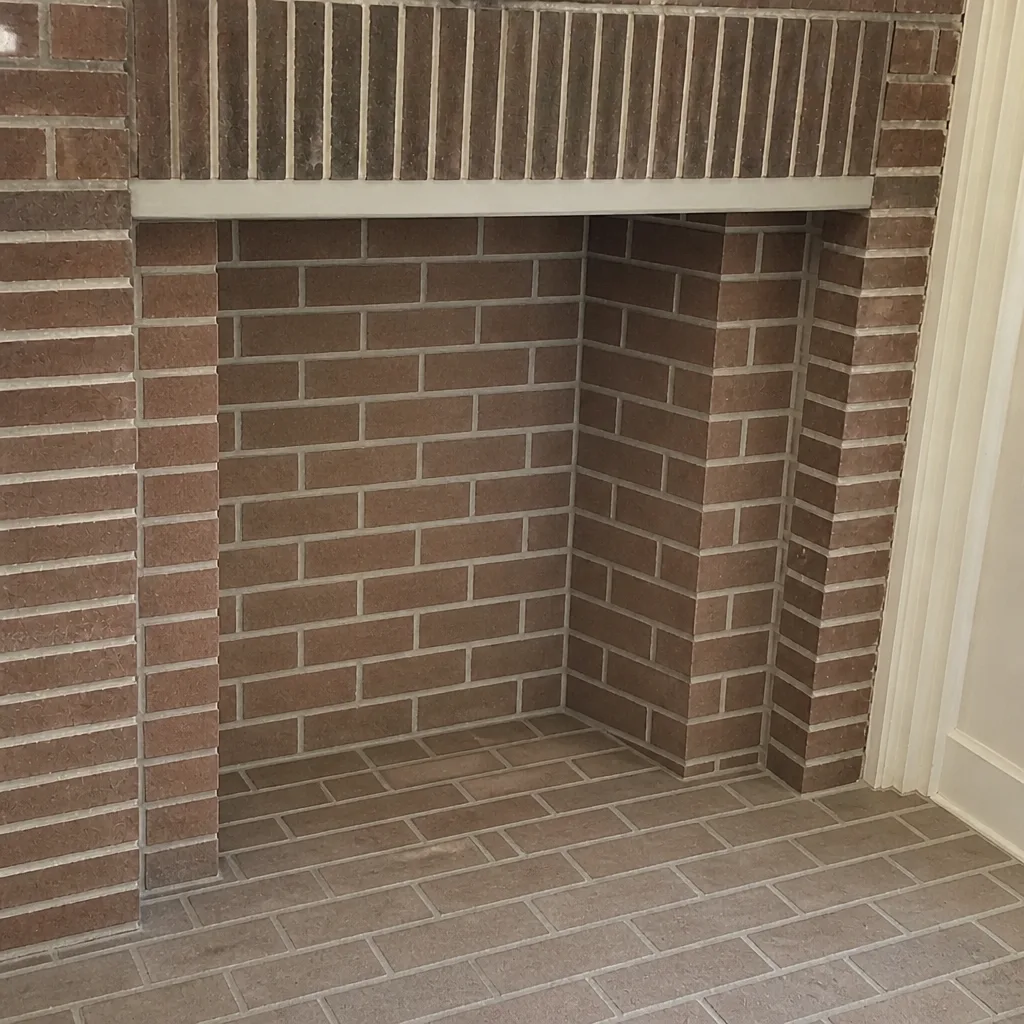
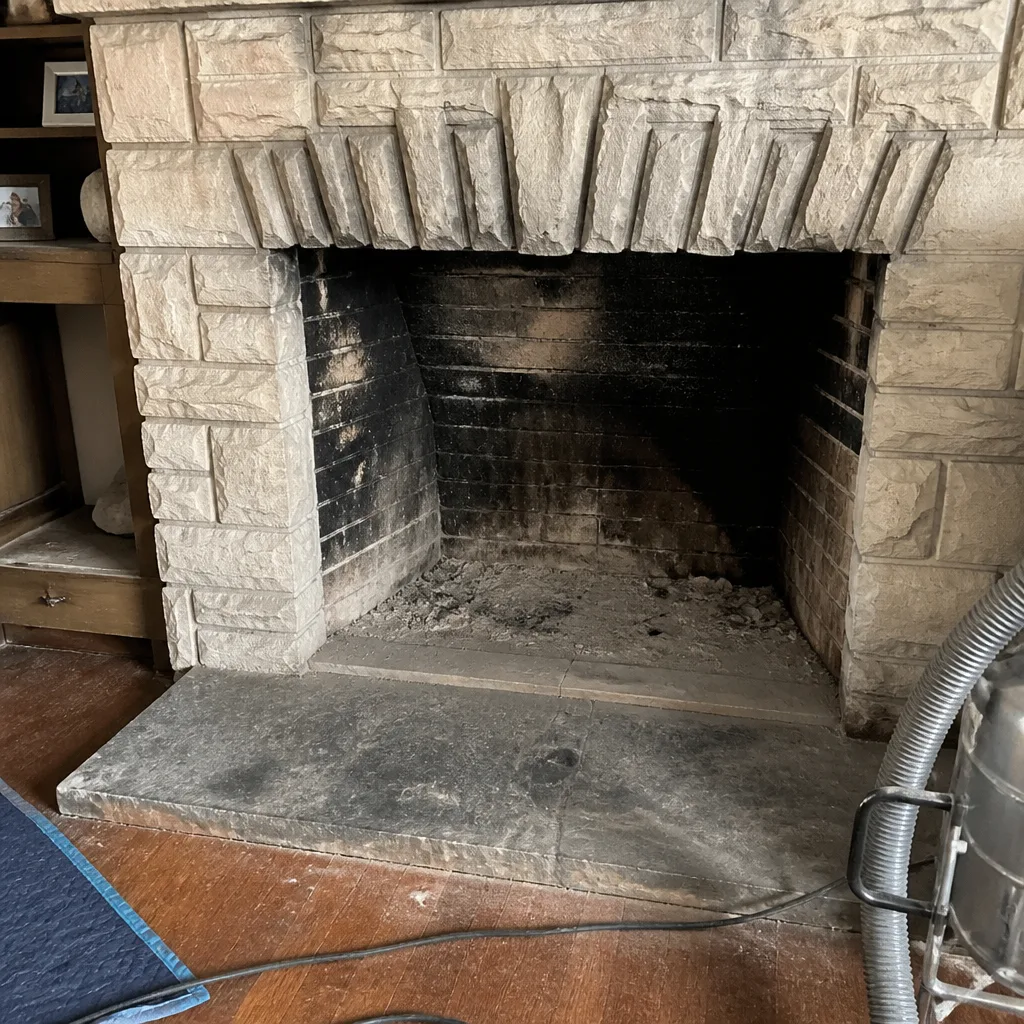
See the difference
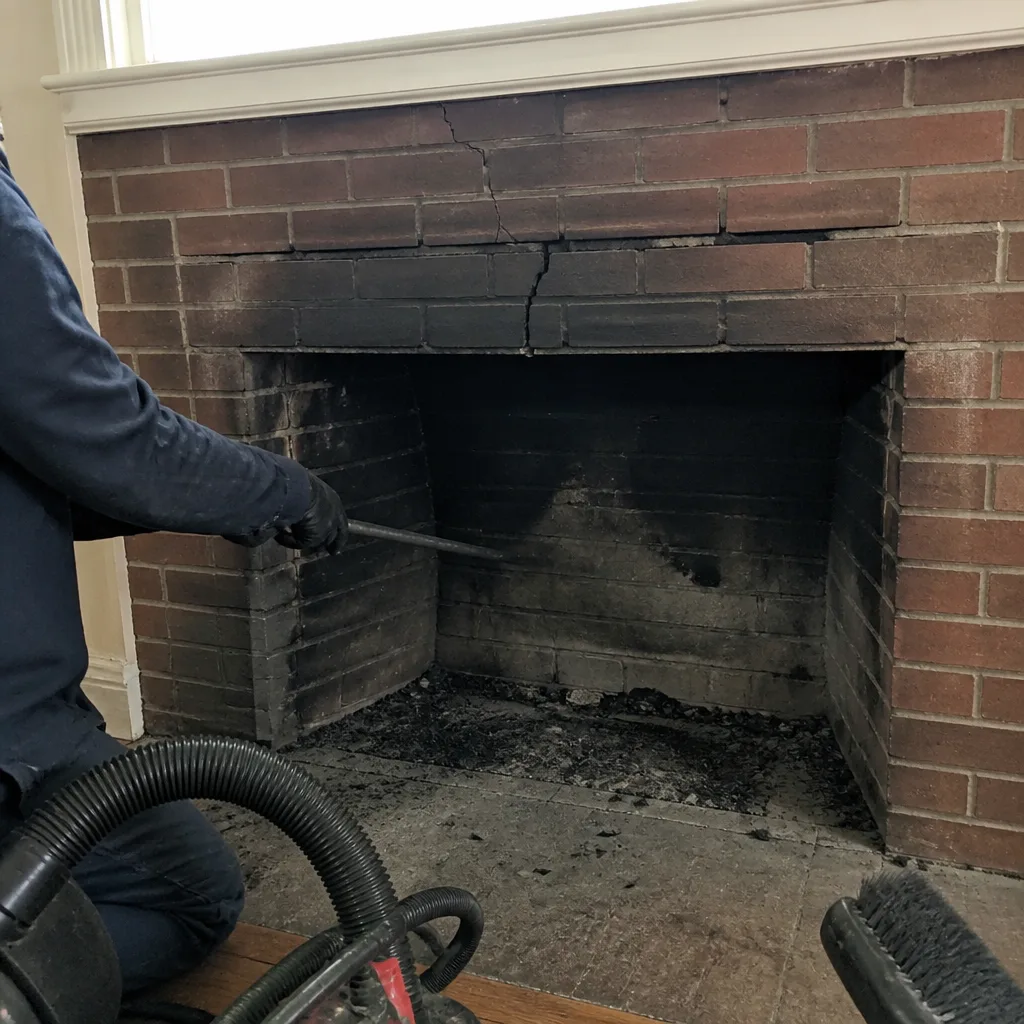 Before
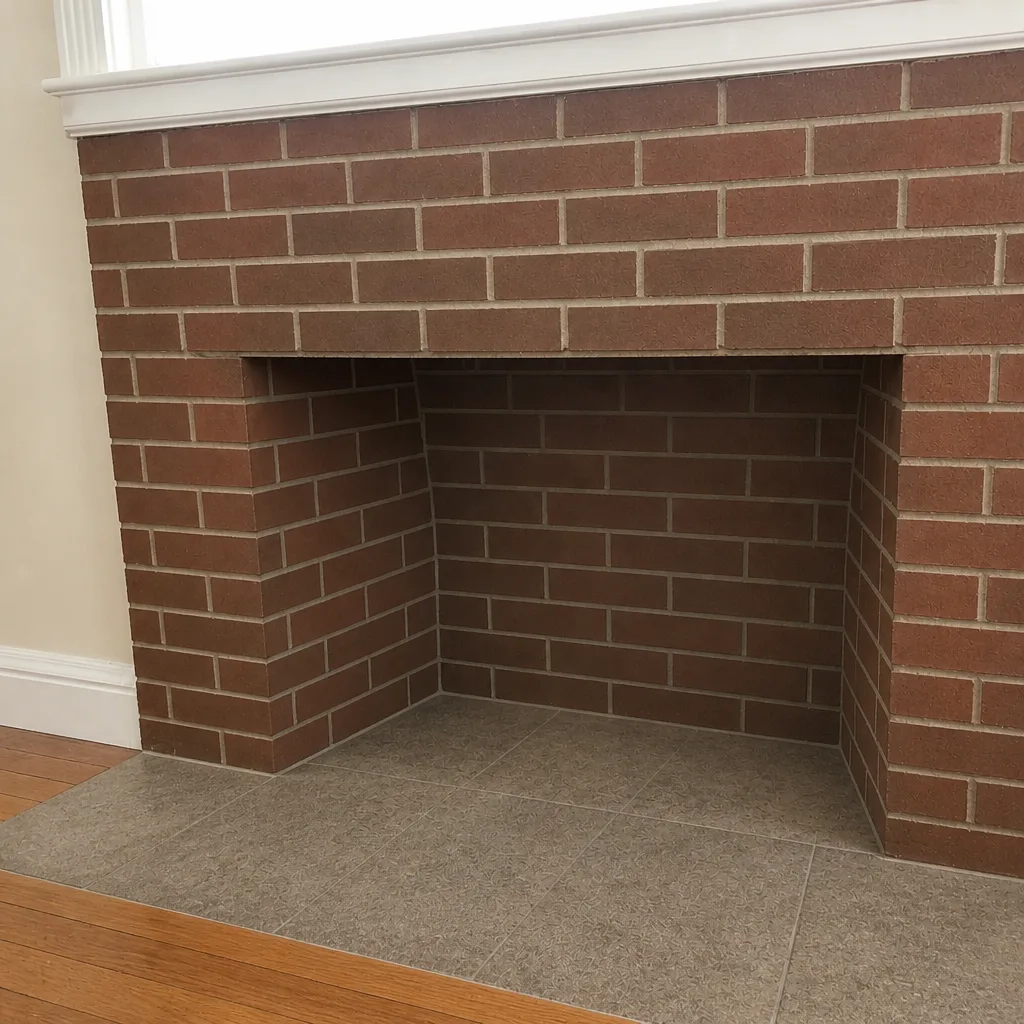 After
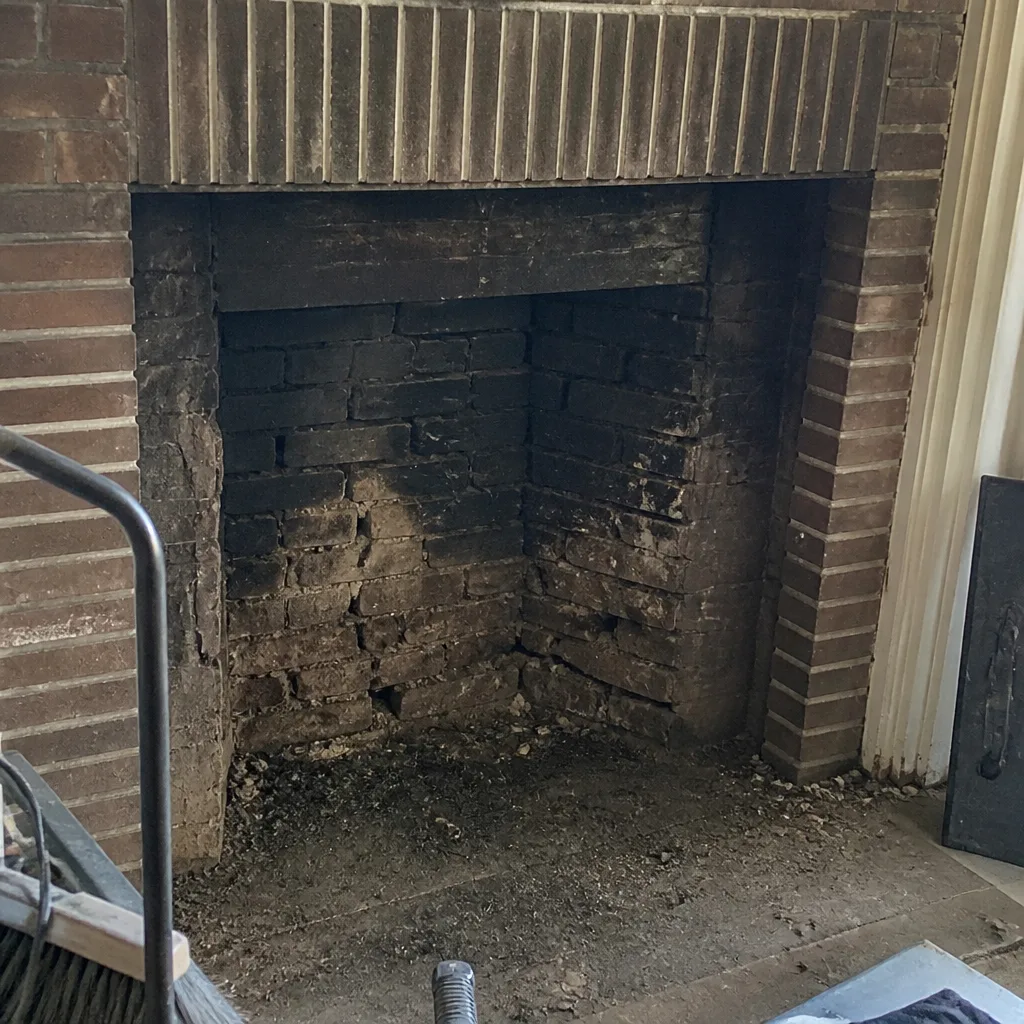 Before
 After
 Before
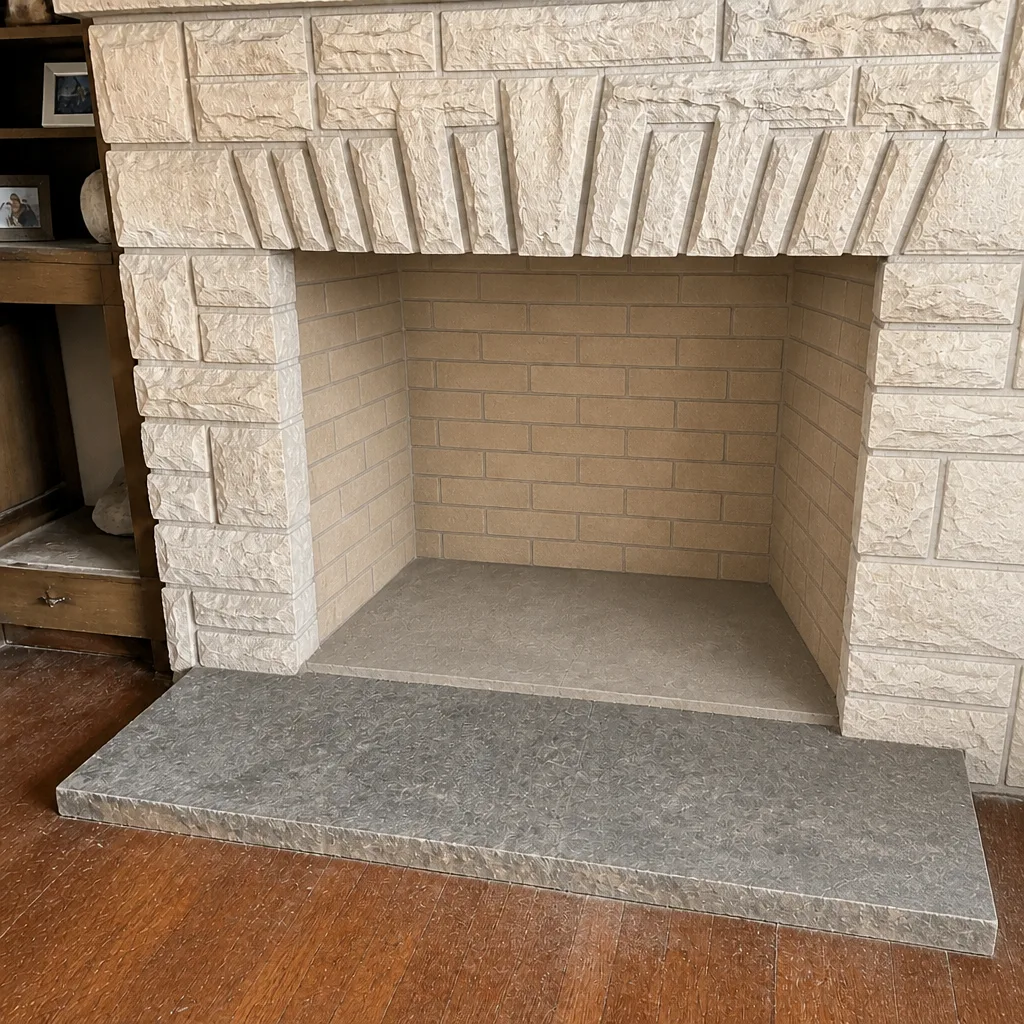 After
When to Call a Professional
Call a chimney specialist if you’ve never had the flue inspected, if you’ve moved into a home in North Buffalo with a fireplace or stove you haven’t had assessed, or if a previous inspector or insurance company has recommended liner or masonry work you can’t verify. Call us if you’ve had a chimney fire, if you notice a strong creosote smell on warm days, if the fire smokes back into the room, or if the chimney cap or crown looks damaged. And call if a sweep has told you the flue needs a liner but hasn’t shown you why. We use a camera inspection and a photo report you can see, and we can work with your insurer where relevant. Chimney Sweep North Buffalo offers free estimates in North Buffalo, call (877) 523-6169. We answer 24/7, and fast dispatch runs from 7am to 7pm, Sunday through Friday.
Frequently Asked Questions
A standard sweep in North Buffalo typically runs in the low-to-mid hundreds of dollars, and a standalone inspection is priced separately. Heavy creosote removal, liner resurfacing, and cap or crown work are quoted after an assessment. The written estimate sets the final price. Call (877) 523-6169 for an exact quote, estimates are free.
You need a liner assessment, not automatically a new liner. A camera inspection shows whether the existing liner is intact, cracked, or missing, and that evidence dictates the answer: a still-sound flue may only need resurfacing with HeatShield, an unsalvageable one may need a DuraFlex flexible liner, and a flue in good condition may need nothing. Nothing should be recommended without photos you can see. Call (877) 523-6169 and we’ll walk you through what your flue actually needs.
A chimney burning wood regularly through the heating season should be swept about once a year. In a North Buffalo winter with a lot of shoulder-season burning, a flue that deposits hard may need a check sooner. A camera inspection at the start of the season tells you more about timing than a fixed calendar does. Call (877) 523-6169 to book a sweep and inspection.
Skipping the sweep lets creosote build to Stage 2 and Stage 3, and that deposit is what feeds a chimney fire. A glazed flue can also corrode or crack the liner, and freeze-thaw damage moves into the masonry when moisture gets trapped. The risk builds quietly; nothing about a dirty flue looks wrong from the firebox. Call (877) 523-6169 to get the flue assessed before the season starts.
Yes, a wood stove or insert is cleaned the same way once access is confirmed, with the flue brushed and the appliance and connector checked. An insert often sits in a flue sized for a fireplace, which affects draft and creosote buildup. Call (877) 523-6169 and tell us the setup so we can plan the visit.
Most routine annual cleanings pair with a Level 1 inspection, but a Level 2 camera inspection is the right call after a chimney fire, on a home you’ve just bought, after a change in fuel or appliance, or when a repair has been recommended. If you’re unsure which applies, call (877) 523-6169 and we’ll help you sort it out before booking.
The Bottom Line
A chimney that looks clean from the firebox can still be carrying the deposit that starts a fire. The three things that matter most in North Buffalo: know your creosote stage, because it decides what the cleaning actually requires; check the liner before the first fire, because many pre-1970s chimneys here have never had one; and get an inspection you can see the evidence from, so any repair recommendation is grounded in a camera report rather than a sales pitch. Sweeping, inspection, liner work, cap and crown, and fireplace repair all belong under one specialist so nothing is handed off mid-job. Our technicians have up to 13 years of experience. Call (877) 523-6169 for a free estimate.
Ready to book? Call Chimney Sweep North Buffalo at (877) 523-6169. We answer 24/7. Fast dispatch from 7am to 7pm, Sunday through Friday. Estimates are free, and nothing is recommended without evidence you can see for yourself.
For the full range of services, visit Chimney Sweep North Buffalo.
Written by the team at Chimney Sweep North Buffalo.