
Last updated November 25, 2026
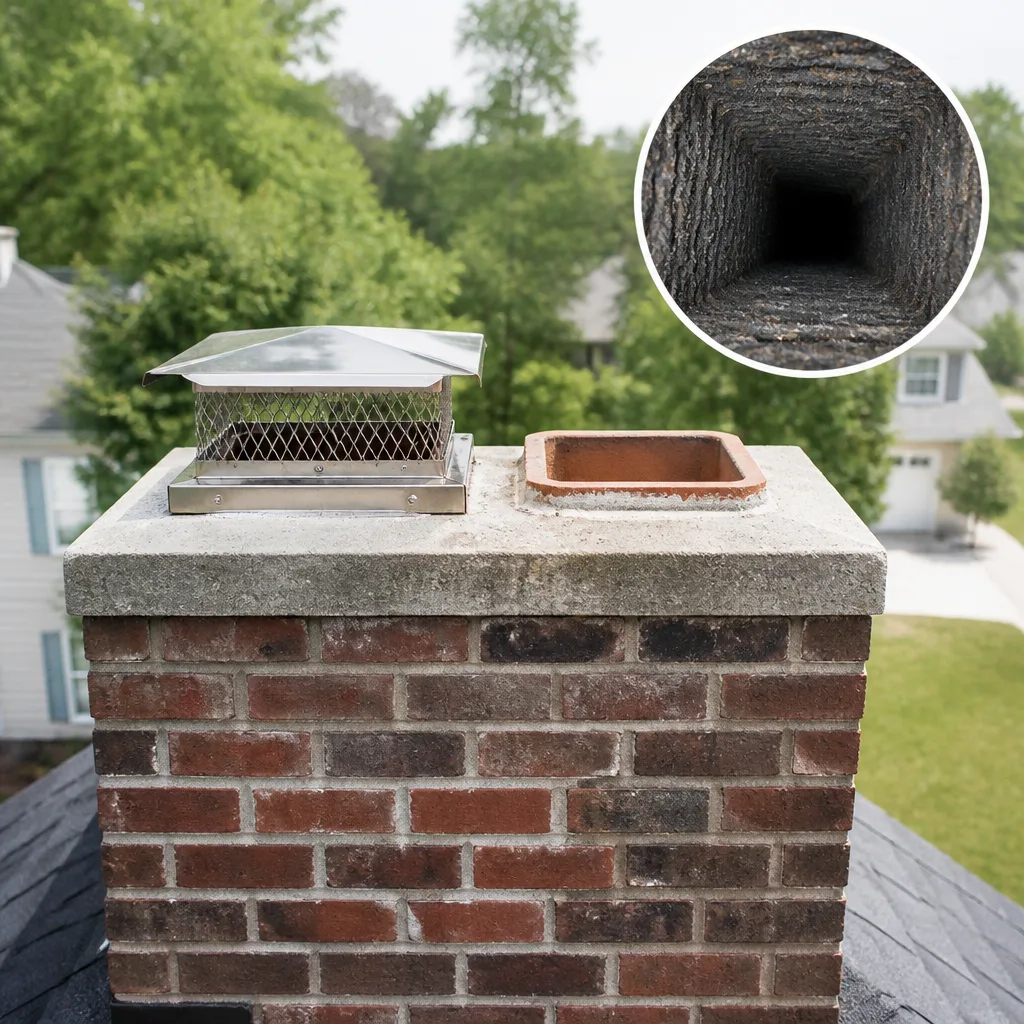 Sweep & inspection
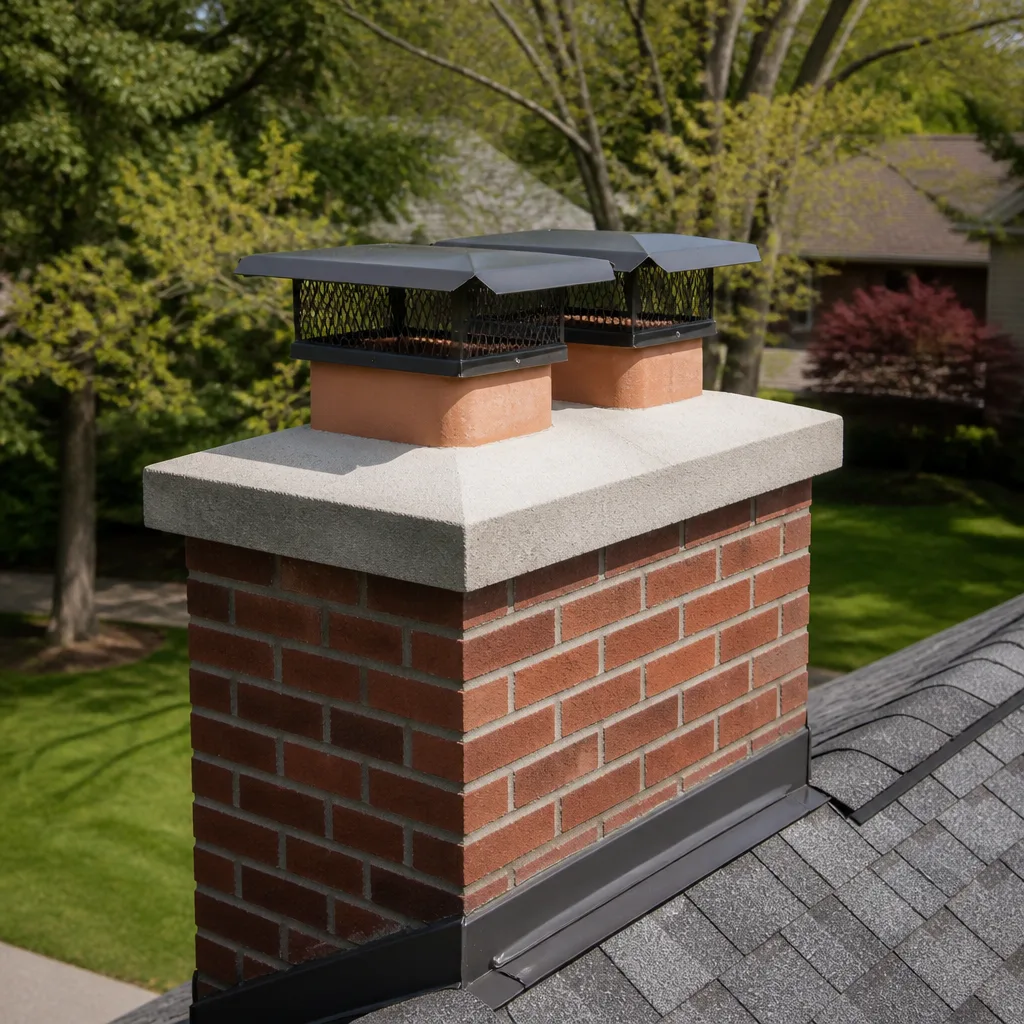 Caps & crowns
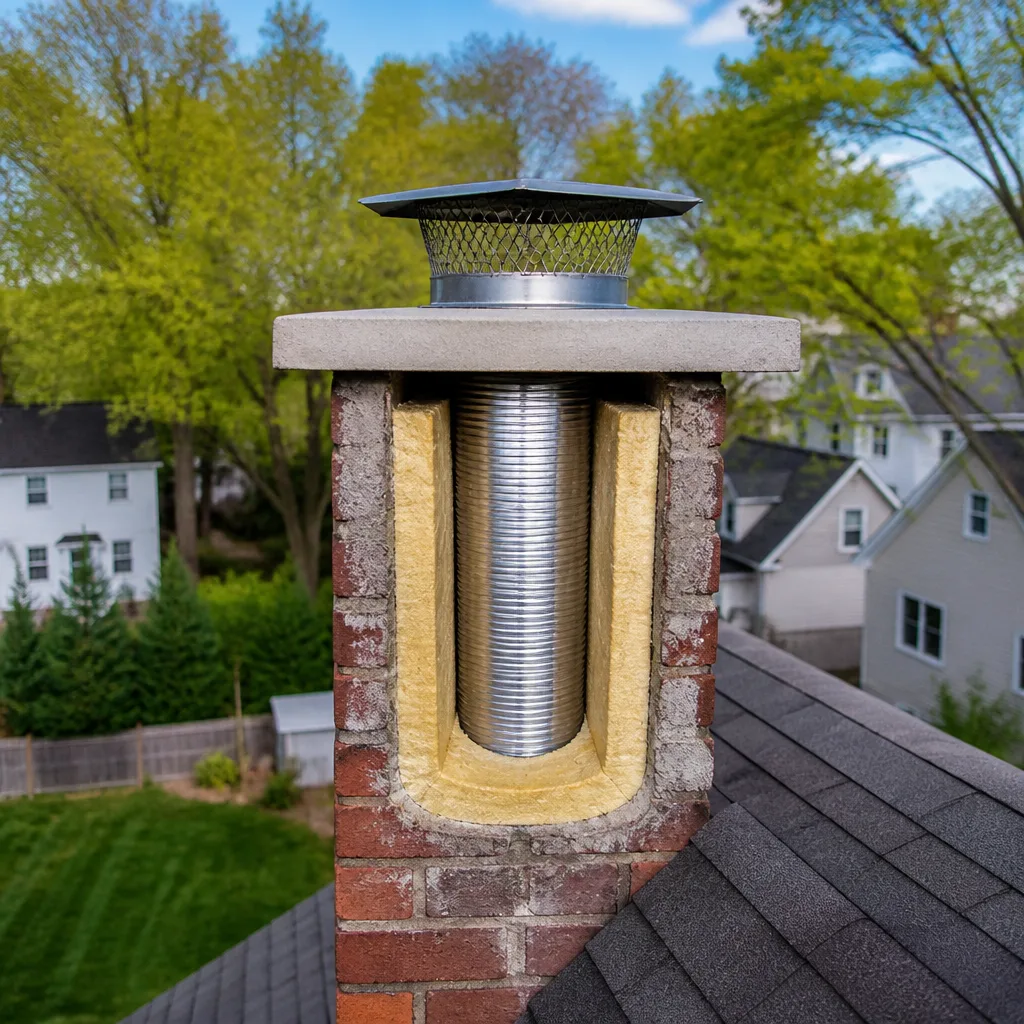 Flue relining
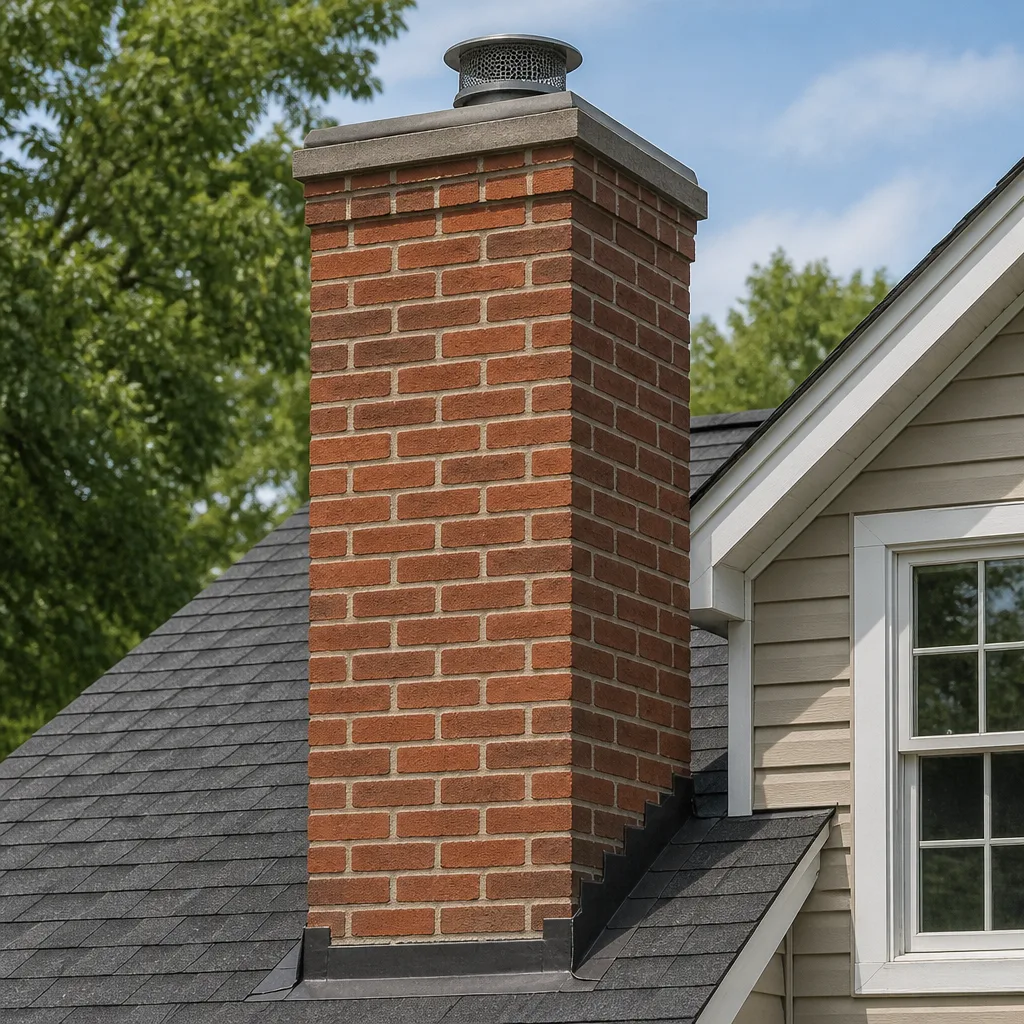 Masonry repair
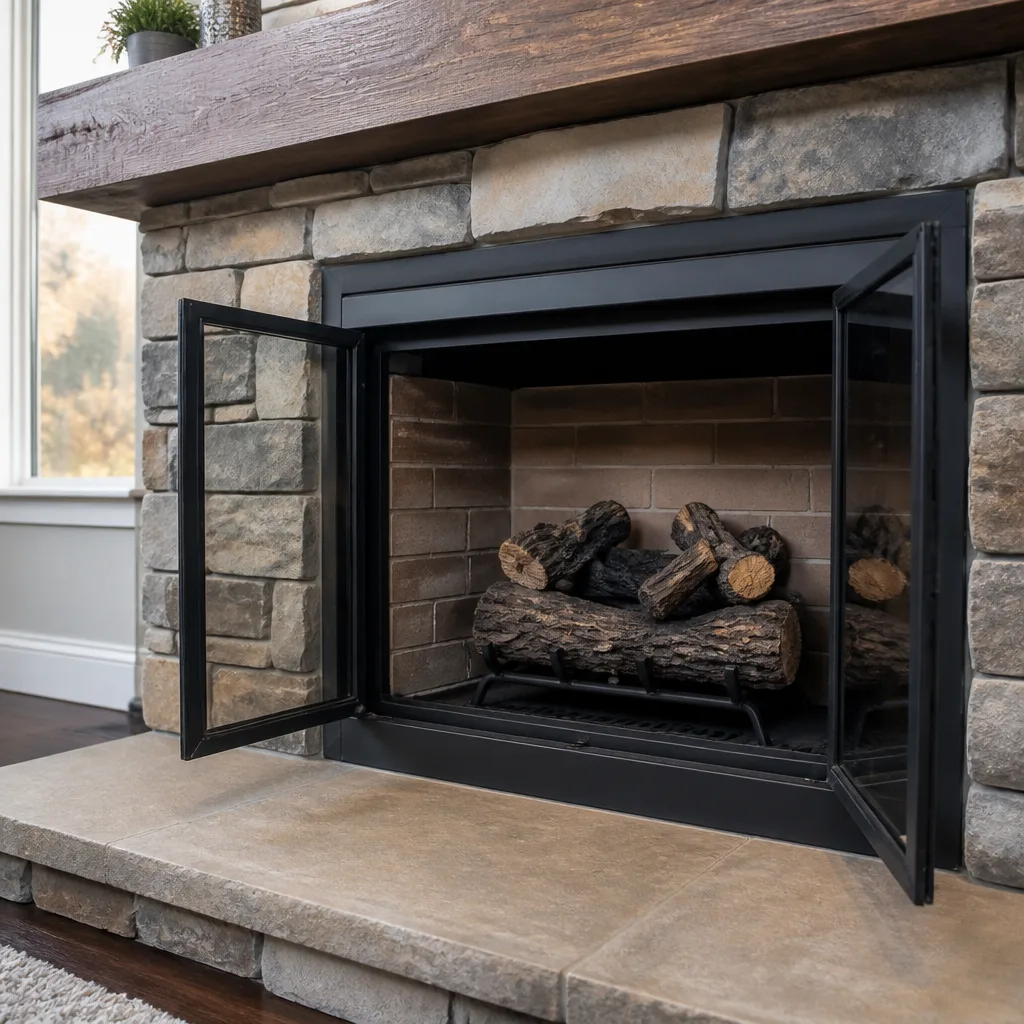 Gas fireplace service
Level 1 sweep and inspection to the NFPA 211 annual standard - flue, crown, cap, and flashing checked and photographed
Chimney sweep logs do not sweep chimneys. They loosen some creosote - which then falls where a brush and vacuum still have to collect it.
Chimney Cleaning Cost Breakdown: The North Buffalo Homeowner’s Reference for 2026
The cheapest chimney cleaning quote in any market almost always omits the camera inspection. That means you’re paying someone to sweep a flue without anyone actually seeing what’s inside it. A $99 special and a $400 quote from a specialist aren’t the same service wearing different price tags. They don’t use the same equipment, they don’t include the same inspection depth, and they don’t carry the same liability coverage. This guide breaks down exactly what North Buffalo homeowners are paying for at each price point in 2026, which line items separate a complete service call from a bare-minimum sweep, and how to read a written estimate before you agree to anything.
Quick Answer
A standard single-flue chimney sweep with a Level 1 inspection in North Buffalo typically runs $180 to $340 in 2026, depending on flue condition and access. That range should include a camera inspection, a written report, and a cap and crown check. Quotes well under $150 usually skip the camera and the report. Quotes above $400 for a routine sweep usually mean the technician found something during inspection, and you should ask to see the photos before approving any add-on work.
Styles & brands we work with
- Sweep & inspection
- Caps & crowns
- Flue relining
- Masonry repair
- Gas fireplace service
Table of Contents
- What Are You Actually Paying For in a Chimney Sweep?
- What Does Chimney Cleaning Cost in North Buffalo in 2026?
- The Line Items That Separate a Complete Call From a Bare-Minimum Sweep
- How North Buffalo Housing Stock Affects Your Price
- When Additional Costs Are Justified vs. When They’re Upsells
- How to Read a Written Estimate Before You Agree
- Inspection Levels and What Each One Costs
- Seasonal Timing and Why It Affects What You Pay
What Are You Actually Paying For in a Chimney Sweep?
You’re paying for three things: labor time, equipment, and liability. A sweep is physical work done at height and inside a flue. The technician spends time on the roof, time at the firebox, and time documenting what they found. The equipment matters as much as the labor. Rotary sweep heads, HEPA vacuums, and inspection cameras cost real money, and a company that owns them charges enough to keep them running.
Liability is the part homeowners rarely think about. If a technician damages a damper or dislodges a liner section during a sweep on a policy that doesn’t cover chimney work, you’re the one holding the repair bill. A legitimate operation carries insurance that covers the work being done. When you compare a $99 quote to a $280 quote, part of that gap is the cost of doing the job with coverage behind it.
Here’s what a complete sweep call should include as a baseline:
- A full sweep of the flue with rotary equipment sized to the flue
- HEPA vacuum containment at the firebox so dust doesn’t enter the room
- A camera inspection of the flue interior
- A check of the damper, smoke chamber, and firebox
- A roof-level look at the cap and crown
- A written report with photos of anything flagged
A bare-minimum sweep might include the first two items on that list. The rest is where the real value lives. In our experience, the camera inspection is what separates a sweep from a guess. Without it, nobody knows whether the flue has a cracked tile, a gap at a joint, or heavy glaze that needs more than a brush. That uncertainty gets passed to you in the form of either a surprise repair bill later or a fire risk you didn’t know about.
If you want to understand what the sweep itself involves beyond the price, our chimney sweep page walks through the process step by step.
What Does Chimney Cleaning Cost in North Buffalo in 2026?
Chimney cleaning in North Buffalo in 2026 typically costs $180 to $340 for a single-flue sweep with a Level 1 inspection. That’s the range you should expect from a specialist who includes camera inspection and a written report. Here’s how the market breaks down across common scenarios.
| Service | Typical 2026 Range | What It Includes |
|---|---|---|
| Single-flue sweep + Level 1 inspection | $180 – $340 | Sweep, camera inspection, cap and crown check, written report |
| Bare-minimum sweep (no camera, no report) | $90 – $150 | Brush and vacuum only |
| Additional flue (second fireplace or stove) | $75 – $150 per flue | Same scope per flue |
| Level 2 inspection (camera, standalone) | $200 – $400 | Video inspection, full report, no sweep |
| Cap replacement | $150 – $350 | Supply and install, varies by flue size |
| Crown repair | $250 – $600 | Depends on extent of cracking and access |
| Liner resurfacing (HeatShield) | $1,200 – $2,800 | Restores deteriorated liner without full relining |
| Full relining (DuraFlex) | $2,500 – $5,500 | New flexible liner for the full flue run |
These are typical estimates, not fixed prices. The written estimate you receive on-site sets the final number, and it should reflect what the technician actually finds. A flue in good condition lands at the low end. A flue with offset sections, heavy creosote, or a firebox that needs attention lands higher.
North Buffalo homes in neighborhoods like Parkside, Central Park, and the streets off Hertel Avenue tend to fall into the middle of that range. The housing stock is older, the flues are often clay tile, and many fireplaces have been retrofitted at some point. Each of those factors adds legitimate labor time. A house where the flue runs straight up from the firebox is a faster job than one with a bend that requires a different sweep head and more careful camera work.
If you’ve already received a repair recommendation and want to know what the fix itself should cost, our chimney repair page covers the repair side of the pricing picture.
The Line Items That Separate a Complete Call From a Bare-Minimum Sweep
A complete service call and a bare-minimum sweep differ by four line items. Each one is a placeholder in the estimate you should be able to point to and confirm.
- Camera inspection. A camera run through the flue shows the condition of the liner from the firebox to the top. Without it, the technician is sweeping blind. Ask whether the camera is included or billed separately.
- Written report with photos. The report should document what the camera saw, note any cracks or gaps, and list anything recommended for repair. A company that inspects but doesn’t document is leaving you with nothing to compare against next year.
- Cap and crown check. The cap keeps rain, animals, and debris out of the flue. The crown sheds water away from the chimney top. Both are visible from the roof and should be checked on every sweep. If the cap is missing or damaged, that’s a repair, and the estimate should quote it separately with a photo attached.
- Damper and smoke chamber review. The damper should open, close, and seal properly. The smoke chamber above it should be smooth and free of heavy buildup. Both are inspected during a complete call and noted in the report.
When those four items appear on the estimate, you’re paying for a sweep plus the information you need to make good decisions about the chimney. When they don’t, you’re paying for a brush and a vacuum. That’s not automatically wrong. Some homeowners just need a sweep and already know the chimney’s condition. But the price should reflect the reduced scope, and you should know what you’re skipping.
If a quote is $99 and a complete call in North Buffalo runs $180 to $340, ask what’s missing. The answer will tell you whether the company is being honest about scope or just pricing to win the call.
How North Buffalo Housing Stock Affects Your Price
North Buffalo is full of homes built in waves, and the chimneys reflect that. The neighborhood around Parkside has larger homes with multiple flues, sometimes a fireplace in the living room and a second in a den or a basement. A house with two fireplaces is two flues to sweep, and that doubles the labor. The base price applies per flue, not per house.
Offsets and bends are common in this housing stock. An offset is where the flue jogs sideways to clear a structural element before continuing up. Older construction sometimes routed the flue around a beam or a stairwell, and the resulting bend means the sweep head has to navigate a turn. That takes more time, a different attachment, and more careful camera work to confirm the brush actually cleaned the full run. It’s legitimate labor, not an invented charge.
Clay tile liners are standard in homes of this vintage. Tile liners crack over time, especially after cold-season cycles where the flue heats and cools repeatedly. Our winters put real stress on a chimney: the freeze-thaw pattern we get in North Buffalo can widen small cracks in tile and mortar, and a crack that’s minor in October can be a bigger problem by March. That’s part of why the camera inspection matters here. You want to know the tile status before the cold sets in, not after.
Some homes in the area have external chimneys, which take the cold differently than interior ones. An exterior chimney runs cooler, which can cause creosote to condense and glaze more heavily on the flue walls. Glazed creosote is harder to sweep off and may require chemical treatment before the sweep, which adds a step and a cost. If your chimney sits on the outside wall, expect the estimate to account for that.
If you’re in a home with a cap that’s been missing or damaged for a while, the flue may have water intrusion and rusted components. That’s a common finding in North Buffalo homes after a hard winter. Replacing a cap before it becomes a bigger repair is cheaper than dealing with the damage it lets in.
When Additional Costs Are Justified vs. When They’re Upsells
Additional costs are justified when the camera shows a specific problem and the estimate ties the repair to what the camera found. They’re upsells when the recommendation arrives without photo evidence you can examine. Here’s how the common add-ons break down.
Justified:
- Liner resurfacing with HeatShield. Justified when the camera shows deteriorated liner joints or a flue that’s lost its smooth interior surface but doesn’t need full relining. HeatShield is designed to restore a liner in place, and it’s the right fix when the structure is sound but the surface isn’t.
- Full relining with DuraFlex. Justified when the existing liner is cracked beyond resurfacing, or when the flue has gaps that can’t be sealed. DuraFlex flexible liner systems are the right choice when a rigid liner won’t fit through offsets or bends.
- Smoke chamber parging. Justified when the smoke chamber is rough and jagged, which causes turbulence and can lead to smoke rolling into the room. Parging smooths it out.
- Damper replacement. Justified when the damper won’t seal or has rusted through. A damper that doesn’t close properly lets heated air escape up the flue when the fireplace isn’t in use.
Often an upsell:
- Liner replacement recommended without a camera inspection of the full flue
- Crown repair quoted without a photo of the cracking
- Cap replacement suggested when the existing cap is intact and functioning
- Any repair recommended before the sweep has been completed and the flue is clean enough to inspect accurately
The pattern to watch for is the recommendation that arrives before the inspection. If a technician tells you the liner needs replacing before they’ve run a camera through it, the recommendation isn’t grounded in evidence. Our approach is inspect first, recommend second. Nothing gets added to the estimate without a photo you can look at yourself, and we’ll tell you when a repair can safely wait.
If you’d like a second opinion on a repair recommendation you’ve already received, our standalone inspection service exists for exactly that reason. An inspection is a complete service on its own, not something bundled only with a sweep booking.
How to Read a Written Estimate Before You Agree
A written estimate should give you enough detail to compare it against any other quote you’ve received. The language signals how thorough the job will be. Here’s what to look for.
- A stated scope. The estimate should name each task: sweep of flue X, camera inspection of flue X, cap check, crown check, report delivered. If it just says “chimney cleaning” with a dollar amount, the scope is undefined.
- Line-item pricing. A single total with no breakdown makes it hard to see what you’re paying for. A good estimate separates the sweep from any repairs, and separates labor from materials where relevant.
- Photo documentation. Repairs should be tied to a photo of the condition. If the estimate says “liner repair, $1,800,” there should be a photo of the liner problem and a note on which material is being used to fix it.
- An “exclusions” or “not included” section. This tells you what the price doesn’t cover. If the estimate doesn’t state exclusions, ask what’s outside the scope.
- The material specification. A repair quote should name the product line: HeatShield for resurfacing, DuraFlex for relining, a named cap from Olympia Chimney or Famco for cap work. Generic “chimney mortar” for a liner repair is a signal the estimate isn’t specific.
- No pressure to sign on the spot. A fair estimate is something you can take, read, and compare. If you’re told the price is only good today, that’s a pressure tactic, not a pricing policy.
The estimate should also tell you what happens next. If the sweep reveals a problem that wasn’t in the original estimate, what’s the process for a revised scope? At Chimney Sweep North Buffalo, the estimate and scope get agreed before we book, and any change gets a new written estimate with the photo that prompted it.
For work that involves the top of the chimney, cap and crown repairs are often quoted alongside the sweep because they’re visible during the roof check. Our chimney cap & crown page explains what those repairs involve and how the materials are selected.
Inspection Levels and What Each One Costs
Not every sweep needs the same inspection depth. The industry uses three inspection levels, and the level affects what you pay.
- Level 1 inspection is included with a routine sweep. It’s a visual and camera check of the accessible parts of the chimney and firebox, done while the flue is being swept. This is the baseline for a well-maintained chimney that hasn’t changed use.
- Level 2 inspection is a more thorough camera inspection of the full flue, often with video documentation, and it’s the appropriate level when there’s been a change: a new home purchase, a change in fuel type, a chimney fire, or a repair recommendation you want to verify. It can be booked as a standalone service or alongside a sweep, and it typically runs $200 to $400 on its own.
- Level 3 inspection involves access to concealed parts of the chimney, which can mean removing interior finishes or cutting into the chase. It’s the most expensive and is reserved for specific diagnoses where the cause of a problem can’t be determined from the flue itself.
North Buffalo homeowners shopping for a sweep should confirm what inspection level is included. A quote that says “sweep and inspection” but doesn’t specify the level may be a Level 1 that doesn’t include full-flue camera documentation. If you’ve recently bought a home with a fireplace, a Level 2 inspection booked before or alongside the sweep gives you a clear picture of what you inherited.
The cost of a Level 2 inspection is small compared to the cost of relining a flue you didn’t know was damaged. Our technicians have up to 13 years of experience assessing flues, and the camera tells the story either way.
Seasonal Timing and Why It Affects What You Pay
Sweep costs don’t usually change with the calendar, but availability does. Most homeowners in North Buffalo book their sweep in late summer or early fall, before heating season. The weeks just before the first cold snap are the busiest. If you wait until the first hard freeze to call, you may wait longer for an appointment.
Scheduling ahead has a second advantage. A flue that’s been sitting since spring can develop surprises over the summer: animals nesting in the flue, cap damage from a storm, or moisture getting in. A sweep in early fall catches those problems while there’s still time to fix them before you need the fireplace. The price for the sweep stays the same, but the cost of putting off a repair gets higher.
There’s also a practical reason to inspect before winter. Our freeze-thaw cycles widen small cracks in tile and mortar, and a crack that’s a hairline in September may need a HeatShield repair by spring. Getting the camera inspection in the fall means you know what you’re starting the season with.
Wood-burning appliances put out creosote, and creosote accumulates over the season whether you notice it or not. A sweep removes the buildup before it reaches a stage where it can ignite. The safety case for a yearly sweep is real, and the National Fire Protection Association recommends an annual inspection, with cleaning as needed. If you skip a year or two, the next sweep can cost more because the buildup is heavier and the sweep takes more time.
Common Mistakes to Avoid
- Choosing a sweep on price alone. The cheapest quote in North Buffalo is usually the one that skips the camera inspection and the written report. You save money on the call but lose the information that tells you what the chimney actually needs.
- Approving a liner repair without seeing the photo. If the recommendation doesn’t come with a camera image of the problem, ask for one. A liner replacement that runs $2,500 to $5,500 should rest on evidence you can examine.
- Booking a sweep after the heating season starts. The weeks before the first cold snap are the busiest. Booking in late summer or early fall gets you a slot and gives you time to address any repairs before winter.
- Skipping the sweep because the fireplace “worked fine last year.” Creosote accumulates with every fire, and a chimney that drafts well can still have dangerous buildup. Working fine isn’t the same as being clean.
- Ignoring a missing or damaged cap. A cap is a small repair that prevents larger ones. Rain, animals, and debris getting into a flue can rust the damper and damage the liner over time.
- Assuming a general handyman can do chimney work. Chimney work requires specialized tools and training, and a repair done with the wrong material or the wrong installation can create a bigger problem than it solves. Stick with a chimney-only specialist.
- Not keeping the written report. The report from year one becomes the baseline for year two. Without it, each sweep starts from zero and there’s no way to track whether a small crack is growing.
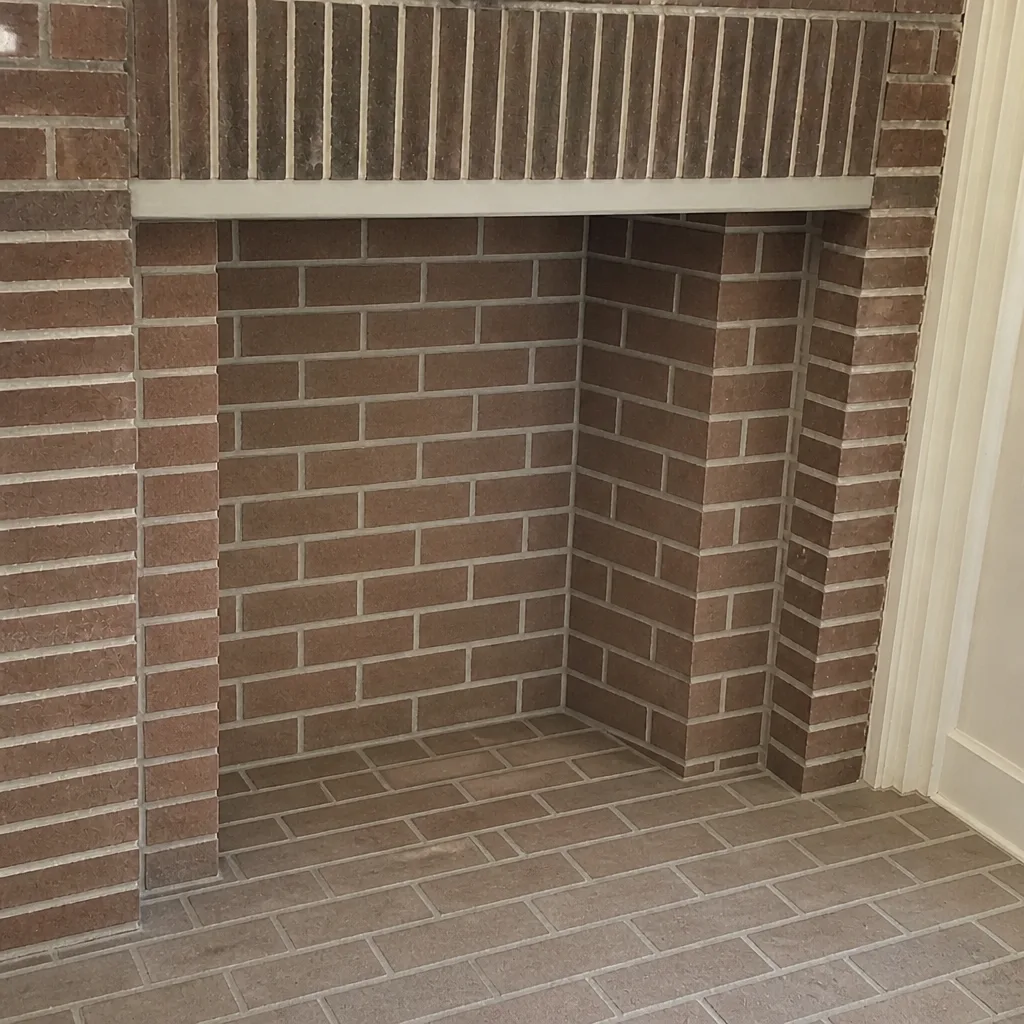
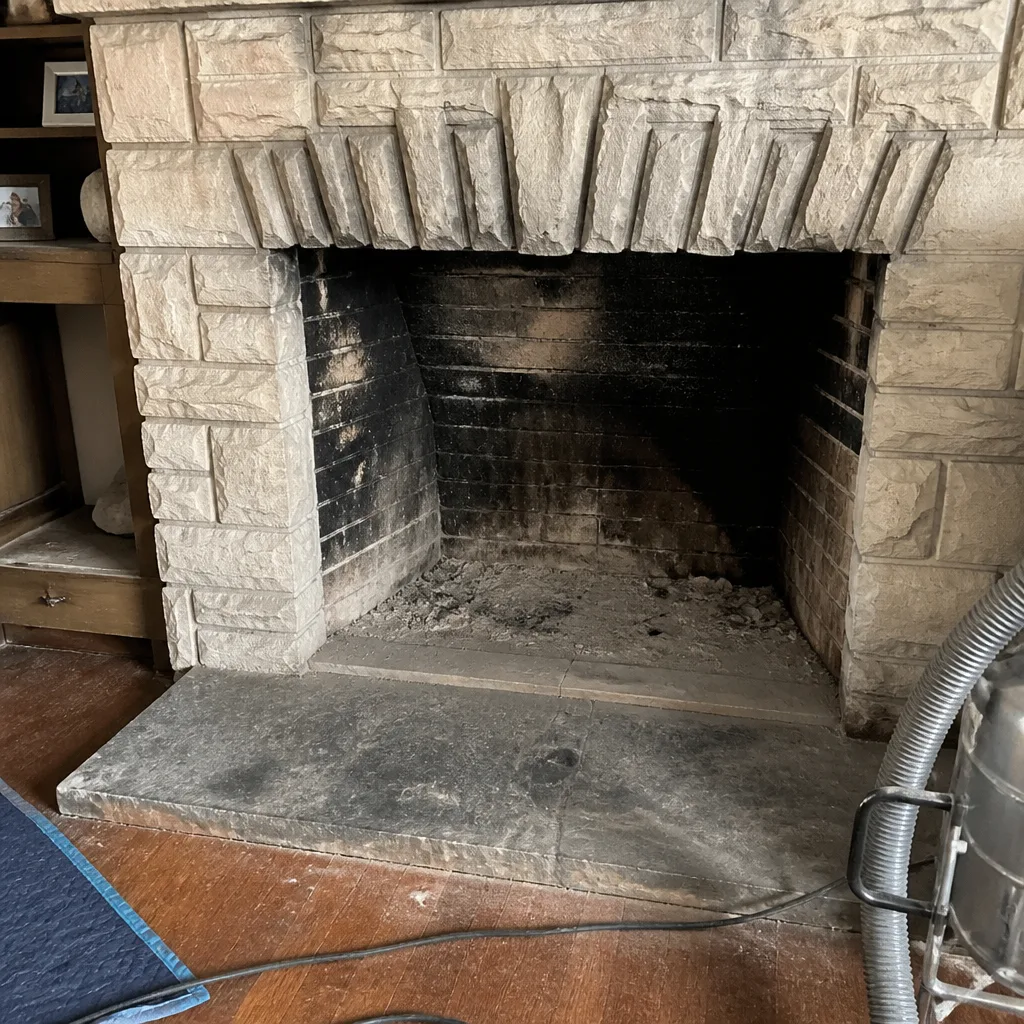
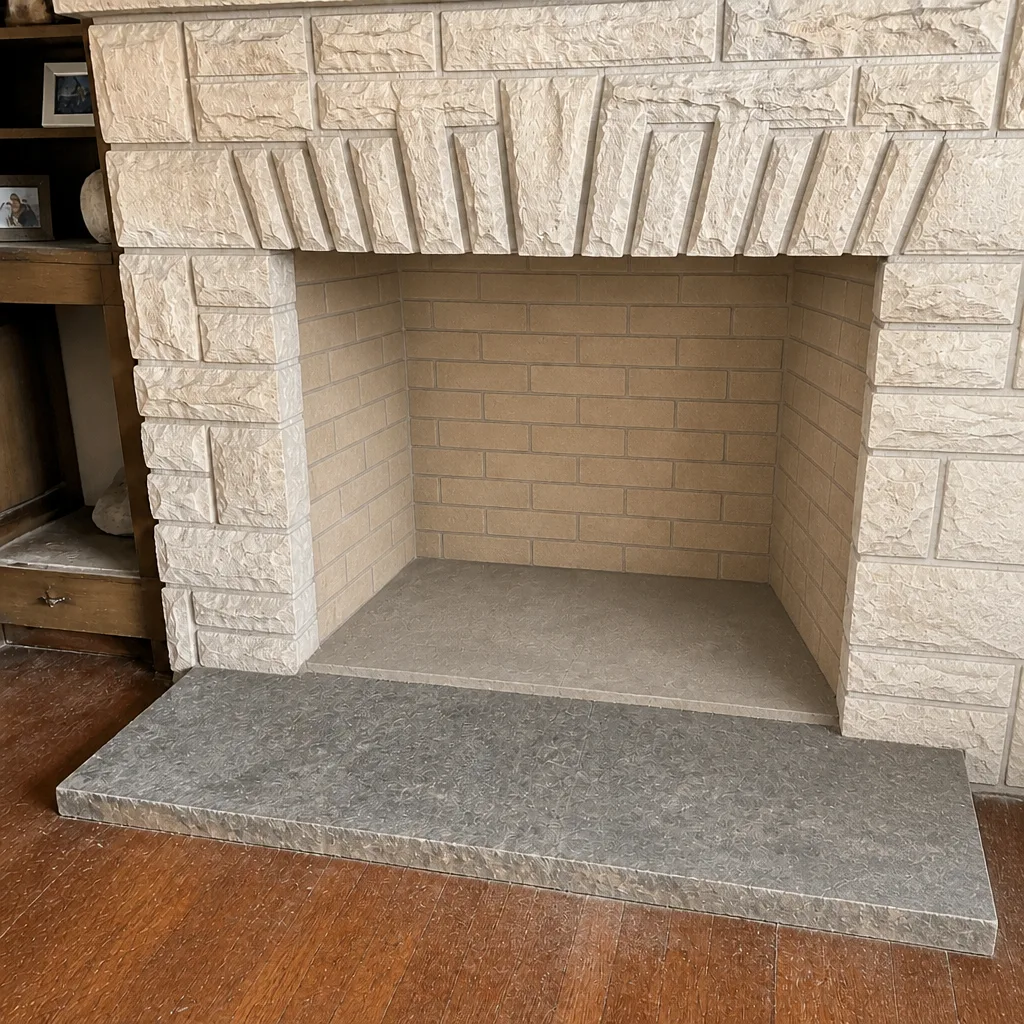
See the difference
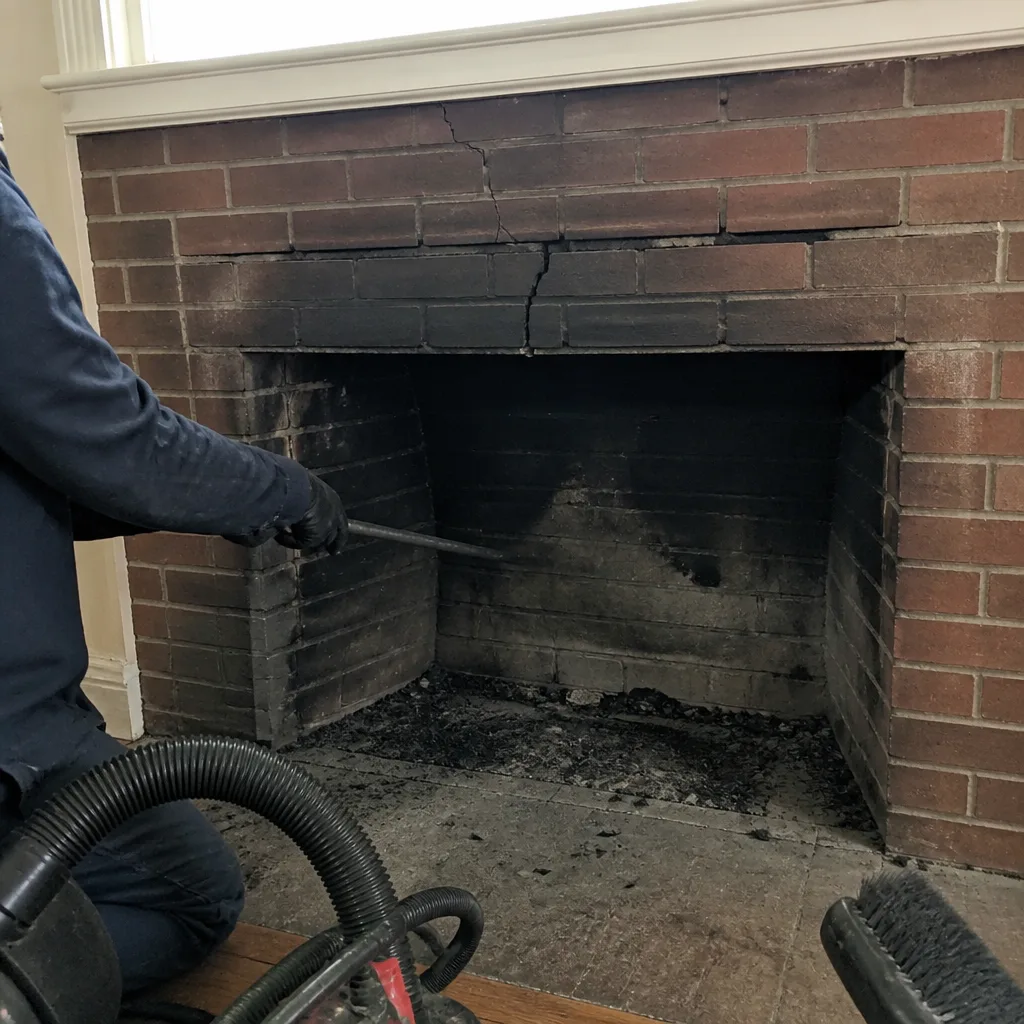 Before
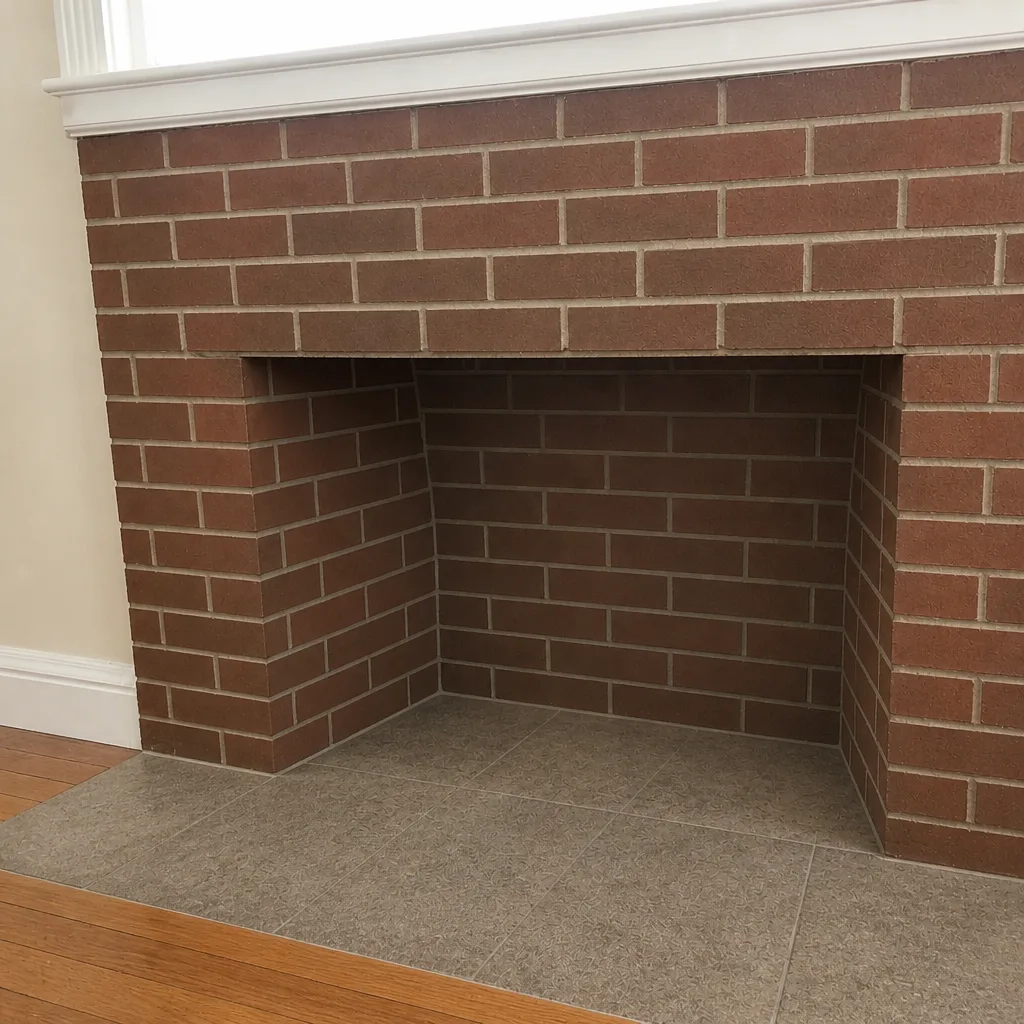 After
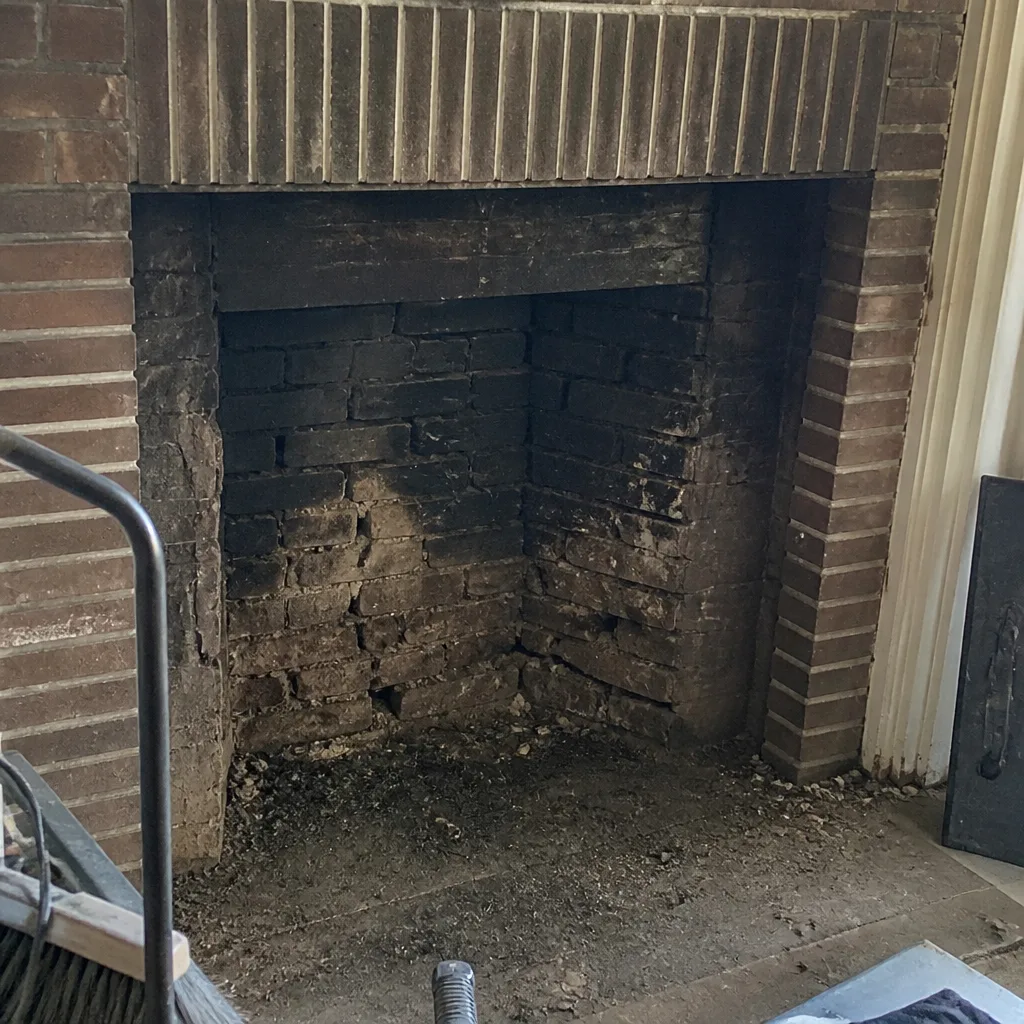 Before
 After
 Before
 After
When to Call a Professional
Call a professional when you need a routine annual sweep, when you’ve just bought a home with a fireplace and want a Level 2 inspection, or when a previous technician or inspector has recommended a repair and you want a specialist to verify it and quote the fix. Call when you notice a strong odor from the fireplace, smoke rolling into the room when the fire is lit, or visible damage to the cap or crown from the ground. Call if it’s been more than a year since the last sweep, or if you’ve had a chimney fire at any point. Chimney Sweep North Buffalo offers free estimates in North Buffalo. Call (877) 523-6169. We answer 24/7. Fast dispatch from 7am to 7pm, Sunday through Friday. Closed Saturday.
Frequently Asked Questions
A single-flue chimney sweep with a Level 1 inspection in North Buffalo typically costs $180 to $340 in 2026. The range depends on flue condition, access, and whether the chimney has offsets or multiple fireplaces. A bare-minimum sweep without a camera inspection usually runs $90 to $150, but it skips the documentation that helps you catch problems early. Call (877) 523-6169 for an exact quote; estimates are free.
Yes, a camera inspection should be part of every sweep. Without it, the technician can’t see cracks in the liner, gaps at joints, or heavy glazed creosote that a brush won’t fully remove. The camera turns a sweep into a documented assessment of your chimney’s condition. If a quote doesn’t include one, ask why. Call (877) 523-6169 for a quote that includes the inspection.
Once a year is the standard recommendation for a wood-burning fireplace, with cleaning as needed based on what the inspection finds. Homes that burn frequently through the winter may need a sweep more often, and homes that rarely use the fireplace may stretch the interval. The annual inspection is the anchor. Call (877) 523-6169 to book yours.
Creosote builds up on the flue walls with every fire, and heavy buildup can ignite. A chimney fire can damage the liner and, in serious cases, spread beyond the chimney. Carbon monoxide is the other risk: a blocked or damaged flue can let combustion gases back into the home. A yearly sweep and inspection is the basic safeguard against both. Call (877) 523-6169 to schedule.
A liner repair is justified when the camera shows a specific defect, such as a deteriorated surface that HeatShield can resurface or a cracked liner that needs DuraFlex relining, and the estimate includes a photo of the problem. It’s an upsell when the recommendation comes without camera evidence. Ask to see the photo before approving any liner work. Call (877) 523-6169 for a second opinion.
Older North Buffalo homes often have offset flues, multiple fireplaces, or exterior chimneys, and each of those adds legitimate labor time. Offsets require different sweep equipment and more careful camera work. Multiple fireplaces mean multiple flues. Exterior chimneys can accumulate heavier glazed creosote. None of these are invented charges; they reflect the work the house actually requires. Call (877) 523-6169 for an estimate tailored to your home.
The Bottom Line
A chimney sweep in North Buffalo in 2026 costs $180 to $340 for a complete single-flue service that includes a camera inspection, a written report, and a cap and crown check. Anything much cheaper is almost certainly skipping the inspection and the documentation, which is the part of the service that protects your home. Anything much higher needs a photo behind it. Compare estimates on scope, not on the headline number, and ask to see the camera images before approving any repair. Chimney Sweep North Buffalo works with professional-grade materials from DuraFlex, HeatShield, Olympia Chimney, and Famco, and the estimate is agreed before we book. Call (877) 523-6169 to schedule a free estimate. We answer 24/7. Fast dispatch from 7am to 7pm, Sunday through Friday. Closed Saturday.
Written by the team at Chimney Sweep North Buffalo.